


Mold inside AC ducts is not just a dust problem. It can spread musty odors, affect airflow, and keep allergy-sensitive rooms uncomfortable when the system runs. The serious step is to inspect moisture, duct material, coils, drain pans, and visible contamination before cleaning begins. The experienced solution is Professional Mold Remediation, safe duct cleaning, moisture correction, and HVAC checks that stop mold from coming back.
Quick clue: clean the contamination, fix the moisture, check the HVAC system, and replace moldy porous duct material when cleaning is not enough.
Air Duct Cleaning for Mold Removal
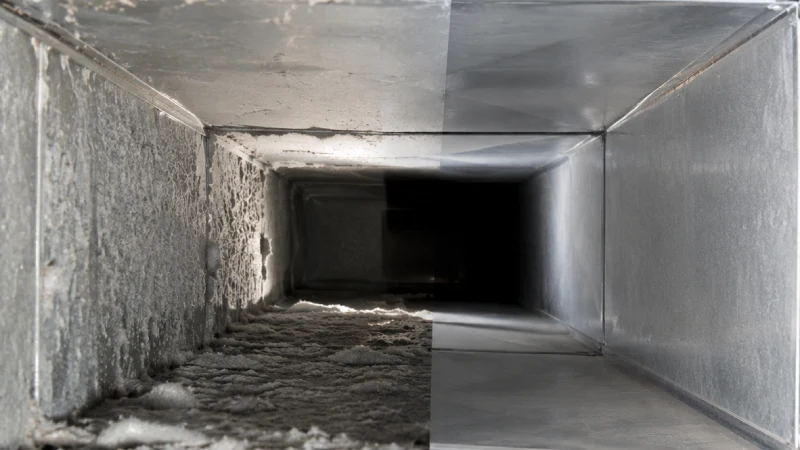
Air Duct Cleaning for Mold Removal should begin with proof, not panic. This section explains when mold inside ducts becomes a real concern and why ordinary dust cleaning is not enough.
Mold needs moisture, dust, and a suitable surface to grow. In AC systems, this can happen around coils, drain pans, damp insulation, wet duct liners, or poorly sealed duct sections. Once airflow begins, musty odor and particles may move into rooms.
The most common warning signs include:
- Musty smell when the AC starts.
- Visible mold-like spots near vents.
- Wet insulation around ductwork.
- Condensation near grilles or ceilings.
- Dusty or dark vent edges.
- Repeated allergy symptoms indoors.
- Water stains near the AC areas.
- Weak airflow with damp odor.
A home with dirty ac ducts may also have dust, pollen, and debris moving through the system. Mold becomes more serious when that dust mixes with moisture.
A professional cleaning service can help connect duct issues with wider home hygiene. Duct cleaning works better when bedroom dust, fabric allergens, moisture, and surface contamination are also reduced.
|
Warning Sign |
Possible Meaning |
First Step |
|
Musty AC smell |
Moisture or mold |
Inspect coils and ducts |
|
Wet insulation |
Porous material risk |
Check replacement need |
|
Black spots near the vent |
Possible growth |
Avoid brushing dry |
|
Allergy flare indoors |
Airflow exposure |
Check AC timing |
|
Dust after cleaning |
Recirculation issue |
Inspect returns |
The key point is simple. Mold removal is not only about cleaning what you see. It is about finding why moisture allowed growth in the first place.
Professional Mold Remediation: When It Matters
Professional Mold Remediation matters when mold is visible, widespread, hidden inside the HVAC system, or linked with water damage. This section explains when expert help is safer than DIY cleaning.
Small surface spots on non-porous materials may be cleaned safely in some cases. But HVAC mold is different because air movement can spread particles. Brushing, blowing, or vacuuming without containment may release contamination into rooms.
Professional remediation focuses on:
- Finding the moisture source.
- Protecting occupied rooms.
- Cleaning contaminated components.
- Removing loose debris safely.
- Checking coils, pans, ducts, and vents.
- Replacing materials that cannot be cleaned.
- Confirming airflow and dryness.
- Preventing repeat growth.
This is where diy vs professional duct cleaning becomes important. DIY vent wiping may clean a grille, but it cannot properly clean internal ductwork, inspect hidden moisture, or verify contaminated insulation.
Many diy duct cleaning mistakes happen when people push debris deeper into the system. Some also use strong chemicals without understanding duct material or ventilation safety.
A professional ac duct cleaning service should inspect the HVAC system, not only the visible vent cover. Mold-related duct cleaning needs a deeper look at the source.
|
DIY Limit |
Professional Advantage |
|
Cleans only vent covers |
Accesses deeper duct sections |
|
May disturb mold |
Uses controlled cleaning methods |
|
Cannot inspect the full system |
Checks coils, pans, returns |
|
May miss the moisture source |
Finds why mold returned |
|
No verification |
Can document condition |
Professional help is most useful when the issue is hidden, recurring, or connected to damp duct material. That is when simple cleaning becomes too limited.
EPA Warning: What Homeowners Must Know
zxxx
EPA Warning guidance is important because not every duct cleaning claim is accurate. This section explains the practical warnings homeowners should understand before booking mold-related duct cleaning.
The EPA position is careful. Duct cleaning is not automatically needed for every home, but it may be considered when there is substantial visible mold growth, pest contamination, or clogged ducts with excessive dust and debris.
The most important warning is about moisture. If the conditions causing mold growth are not corrected, mold can return. Cleaning without moisture control is usually a short-term fix.
EPA-style warnings homeowners should know:
- Do not rely on duct cleaning alone.
- Correct the moisture source first.
- Wet or moldy duct insulation may need replacement.
- Be cautious with chemical biocides.
- Avoid companies making extreme health claims.
- Ask what parts of the HVAC system are included.
- Get clear inspection findings before service.
If fiberglass duct liner or insulation becomes wet and moldy, cleaning may not be effective. Replacement may be safer because porous materials can hold contamination inside the material.
This matters for UAE homes where AC systems run heavily. A home may smell fresh right after cleaning, but if drain pans, leaks, or damp insulation remain, the musty smell can return.
A wider residential deep cleaning plan can support mold control by reducing dust and organic matter around bedrooms, carpets, curtains, and furniture. Mold prevention needs both air-path care and home-surface hygiene.
|
EPA-Style Concern |
What It Means |
|
Visible mold |
Inspection needed |
|
Wet insulation |
Cleaning may not be enough |
|
Moisture source |
Must be corrected |
|
Biocide use |
Needs caution |
|
Health claims |
Should be evidence-based |
|
HVAC scope |
Must be clear |
The safest decision is evidence-based. Inspect first, clean when needed, replace materials when required, and stop the moisture source.
HVAC System: Where Mold Starts
The HVAC system can create mold risk when moisture, dust, and poor airflow meet. This section explains the main areas where mold starts before it spreads odor or particles.
Mold is often blamed on ducts, but the source may be somewhere else in the AC system. Coils, drain pans, filters, return ducts, damp insulation, and leaky sections can all contribute.
Common HVAC mold points include:
- Evaporator coils.
- Condensate drain pans.
- Wet duct insulation.
- Return-air leaks.
- Dirty filters.
- Poorly sealed duct joints.
- Damp ceiling cavities.
- Blocked drainage lines.
When the HVAC system runs, air passes across these areas and into rooms. If the system contains damp dust or mold, rooms may smell musty or feel uncomfortable.
This is also why dirty air ducts affect children and sensitive family members more noticeably in some homes. Bedrooms, nurseries, and closed rooms may receive repeated airflow from the same system.
|
HVAC Part |
Mold Risk |
What to Check |
|
Coil |
Condensation and dust |
Slime or odor |
|
Drain pan |
Standing water |
Blockage |
|
Filter |
Dust overload |
Replacement schedule |
|
Return duct |
Pulls dirty air |
Leakage |
|
Insulation |
Holds moisture |
Wet or moldy areas |
|
Supply duct |
Moves air to rooms |
Visible debris |
People often ask whether air duct cleaning worth it for apartments. The answer depends on evidence: musty odor, visible contamination, moisture, airflow problems, and system condition.
A complete inspection should not stop at the vent cover. Mold control requires checking the full airflow path.
Area Coverage for Air Duct Cleaning for Mold Removal
Air Duct Cleaning for Mold Removal is especially important in UAE homes where AC use is heavy and indoor air is recirculated often. This section covers Ajman, Abu Dhabi, Dubai, and Sharjah.
Best Duct Cleaning Service In Ajman
Ajman apartments often rely on AC for long hours, especially during hot months. When ducts, filters, or coils collect moisture and dust, musty smells may appear quickly in compact rooms. Residents may notice that symptoms feel worse in bedrooms, living rooms, or closed spaces where air recirculates repeatedly.
Mold-related duct concerns in Ajman are often linked with blocked drainage, dusty filters, damp ceiling areas, or poor ventilation. Apartment layouts can make airflow feel uneven when ducts are dirty or partially restricted. If the AC starts with a damp smell, residents should inspect vents, filters, and nearby ceiling stains before assuming it is normal dust.
Professional inspection is useful when the smell returns after surface cleaning. The right approach should check moisture, duct material, vent condition, and indoor dust sources. A general cleaning service can also support the duct work by reducing dust from rooms, fabrics, and hidden corners.
Ac Duct Cleaning In Abu Dhabi
Abu Dhabi homes can face a mix of heat, dust, and coastal moisture. This makes HVAC moisture control important, especially in apartments and villas where the AC runs for long periods. Musty air, damp vent edges, or repeated sneezing after AC startup may point to a duct or coil issue.
For Abu Dhabi properties, mold control should include coil inspection, drain pan checks, duct condition, and filter replacement. Villas may have longer duct runs and more hidden service areas. Apartments may face compact airflow paths where one contaminated area affects multiple rooms.
A local ac duct cleaning Abu Dhabi service can help when there is visible dust, odor, suspected mold, or AC-related allergy discomfort. The best result comes from combining duct cleaning with moisture correction and proper HVAC inspection.
Duct Cleaning Service In Dubai
Dubai homes often run AC systems for long hours, which makes maintenance more important. Heavy usage can allow dust to collect around vents, filters, returns, and duct surfaces. When moisture enters that system, the mold risk becomes more serious.
High-rise apartments may also deal with dust from corridors, balconies, renovation work, and shared building airflow. Villas may have larger HVAC systems with multiple duct paths and ceiling spaces. In both cases, a musty smell should not be covered with fragrance because odor usually means a source needs attention.
Dubai homeowners should look for moisture near vents, blocked drain lines, dusty return grilles, weak airflow, and repeated dust after cleaning. Duct cleaning can help when there is evidence of contamination, but moisture control and sealing checks should come first. This prevents repeat mold growth after service.
Affordable Air Duct Cleaning In Sharjah
Sharjah homes with children, elderly residents, or allergy-sensitive family members may notice AC-related mold problems faster. Bedrooms often show the first clues because people spend many hours sleeping under cooled airflow. If ducts smell musty or vents show dark dust, the issue should be inspected.
Dust can enter from roads, balconies, parking areas, and building work. Once inside, it settles on bedding, curtains, mattresses, and vents. When moisture is also present, the risk of odor and mold-related discomfort can increase.
A Bedroom Deep Clean can support duct cleaning by reducing allergens around sleep areas. For Sharjah homes, the best approach is to inspect the AC system, clean contaminated areas, check moisture, and reduce dust reservoirs inside rooms.
Cleaning vs Replacement: Correct Decision
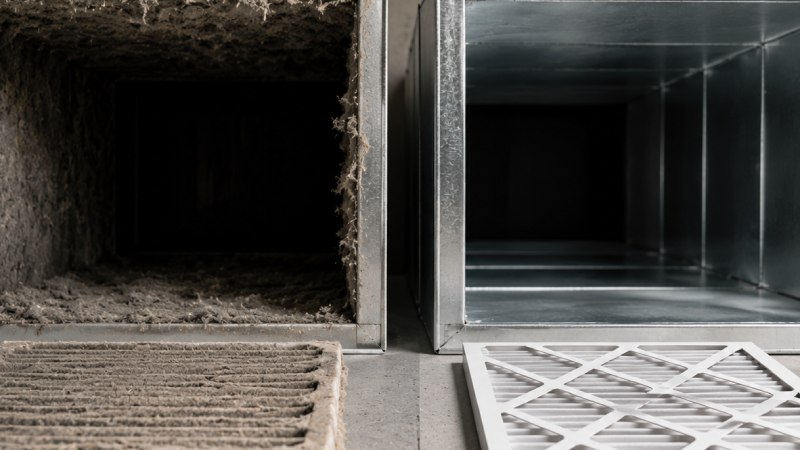
Cleaning is not always the correct answer. This section explains when duct cleaning is enough and when replacement may be safer, especially with wet or moldy porous materials.
Hard, non-porous surfaces can sometimes be cleaned when contamination is accessible, and the moisture problem is fixed. Porous materials are different. If the insulation or fiberglass duct liner is wet and moldy, cleaning may not remove the problem fully.
Cleaning may be suitable when:
- Dust is loose and accessible.
- Mold-like growth is on hard surfaces.
- The moisture source has been fixed.
- Duct material is not damaged.
- HVAC parts can be cleaned safely.
Replacement may be needed when:
- Insulation is wet or moldy.
- The duct liner is porous and contaminated.
- Material is damaged.
- Mold returns after cleaning.
- Water damage is widespread.
- Odor remains after proper cleaning.
Homeowners checking deep cleaning signs should also look outside the duct system. Moldy odors may come from bathrooms, bedrooms, mattresses, carpets, curtains, or damp walls.
|
Condition |
Better Option |
|
Dusty vent cover |
Clean |
|
Loose duct debris |
Professional cleaning |
|
Hard surface contamination |
Clean after moisture correction |
|
Wet insulation |
Replace |
|
Moldy fiberglass liner |
Replace |
|
Recurring odor |
Reinspect the moisture source |
Cost should be judged by scope, not only price. People reviewing Deep Cleaning Cost should ask what is included, what is inspected, and whether moisture or duct material problems are addressed.
Correct decisions protect the home from repeat work. Cleaning the wrong material can waste money and leave the real issue in place.
Prevention Plan: Stop Mold Returning
Prevention is the part that many homes miss after duct cleaning. This section explains how to keep mold from returning by controlling moisture, dust, airflow, and HVAC maintenance.
Mold prevention begins with moisture control. Keep humidity low where possible, clear drain lines, repair leaks, and do not ignore damp smells. A clean system can become contaminated again if moisture returns.
Practical prevention steps include:
- Replace or clean AC filters on schedule.
- Check drain pans and drain lines.
- Keep vents open and unblocked.
- Inspect for condensation near vents.
- Keep bedrooms dust-controlled.
- Fix water leaks quickly.
- Avoid overcooling rooms.
- Check duct insulation after leaks.
- Inspect after renovation or ceiling work.
A professional cleaning service can help reduce dust reservoirs around the home. Less dust means less organic material entering the HVAC system.
A simple prevention schedule:
|
Frequency |
Task |
|
Weekly |
Dust and vacuum bedrooms |
|
Monthly |
Check AC filters |
|
Every 2–3 months |
Inspect vents and odors |
|
After a water leak |
Check duct insulation |
|
After renovation |
Inspect filters and ducts |
|
When musty smell appears |
Book an HVAC inspection |
Prevention is not complicated, but it must be consistent. Clean ducts, dry components, sealed air paths, and low dust levels work together.
Frequently Asked Questions: Mold Duct Cleaning
1. Can air duct cleaning remove mold completely?
Air duct cleaning may remove mold from accessible hard surfaces, but it will not solve the problem if moisture remains. Wet or moldy porous insulation may need replacement instead of cleaning.
2. What does mold in AC ducts smell like?
Mold in AC ducts often smells musty, damp, stale, or earthy when the system starts. The smell may become stronger in closed bedrooms or rooms with poor airflow.
3. Is DIY duct cleaning safe for mold?
DIY duct cleaning is not ideal for suspected mold because brushing or blowing can spread particles. It may also miss coils, drain pans, duct interiors, and hidden wet insulation.
4. How do I stop mold from returning after duct cleaning?
Fix moisture first. Check drain lines, humidity, leaks, damp insulation, and condensation. Replace filters regularly, keep vents clean, and inspect the HVAC system when odors return.
5. Should I clean or replace moldy duct insulation?
Moldy or wet duct insulation often needs replacement because porous material can hold contamination inside. Cleaning may not fully remove mold or prevent regrowth.

