


Sinus congestion that keeps returning can feel like a cold, allergy, or seasonal irritation, but the AC system may be part of the problem when symptoms flare indoors. The serious step is to check for Key Warning Signs, inspect vents, identify musty airflow, and understand Why the AC is the Perfect Culprit for mold growth. The experienced solution is to Inspect and Clean Filters, control humidity, check ducts and coils, and bring in trained professionals when mold, odour, or persistent sinus irritation keeps coming back.
AC Duct Mold and Sinusitis
.jpg)
AC duct mold and sinusitis can be connected when mold spores, dust, and damp odours circulate through indoor air. This section explains the link without replacing medical diagnosis.
AC Duct Mold and Sinusitis becomes a concern when mold, dust, and moisture collect inside ductwork, vents, filters, coils, drain pans, or return air pathways. When the AC runs, it may move those irritants through rooms where people sleep, work, and relax.
Sinusitis can have many causes, including viruses, allergies, structural nasal issues, and irritants. Mold exposure is not the only cause, but it can worsen nasal congestion, facial pressure, sneezing, post-nasal drip, and throat irritation in sensitive people.
Common AC-related clues include:
- Musty airflow
- Congestion that worsens indoors
- Symptoms that improve outdoors
- Visible spots near vents
- Dust returning after cleaning
- Sinus pressure after AC use
- Scratchy throat
- Repeated sneezing
- Watery or itchy eyes
- Odour when the AC starts
A professional cleaning service can help inspect whether the issue is simple surface dust, dirty vents, blocked filters, or a deeper duct and coil hygiene concern.
|
Symptom Pattern |
What It May Suggest |
|
Worse indoors |
Indoor trigger possible |
|
Better away from home |
Building-related clue |
|
Musty smell from vents |
Moisture or mold risk |
|
Dusty vent edges |
Filter or duct concern |
|
Recurring congestion |
Irritant exposure possible |
|
Throat irritation |
Dry or dusty airflow |
AC cleaning does not treat sinusitis medically. It supports a cleaner indoor environment when dust, mold signs, and moisture are part of the problem.
Key Warning Signs: Spot Patterns
Key Warning Signs help separate ordinary dust from AC-related sinus triggers. This section explains the on/off clue, odour, visible growth, lingering congestion, and symptom timing.
Key Warning Signs often appear as patterns, not one single symptom. The most useful clue is whether symptoms become worse inside the property and improve when you leave.
This is sometimes called the on/off clue. If congestion, sneezing, facial pressure, or throat irritation increase when the AC runs, the indoor air pathway should be checked.
Look for these warning signs:
- Musty or earthy smell
- Mildew-like odour from vents
- Black or green specks near grills
- Fuzzy spots around vents
- Dirty filter surfaces
- Sinus pressure indoors
- “Cold-like” symptoms that linger
- Symptoms worse in one room
- Dust blowing from vents
- AC smells after a long shutdown
Visible growth should not be ignored. Spots around vents may be surface contamination, but they can also point to moisture problems deeper in the AC system.
|
Warning Sign |
Why It Matters |
|
Musty odour |
Possible damp contamination |
|
Visible dark spots |
Needs inspection |
|
Lingering congestion |
Possible indoor trigger |
|
Symptoms improve outside |
AC/building clue |
|
Dirty return grill |
Dust circulation risk |
|
Water near AC unit |
Drain or coil issue |
For people who notice allergy-style symptoms, dirty ac ducts may help explain how dust and contaminants in air pathways can affect comfort.
The goal is not to panic over every dusty vent. The goal is to connect symptoms, odour, moisture, and AC operation carefully.
Why the AC is the Perfect Culprit: Moisture Trap
Why the AC is the Perfect Culprit comes down to condensation, dust, darkness, and airflow. This section explains how AC systems can create mold-friendly conditions.
Why the AC is the Perfect Culprit is easy to understand in UAE homes. Air conditioners cool warm air, remove moisture, and create condensation on cold parts such as evaporator coils.
That moisture should drain away properly. If the drain pan, U-trap, drain line, or surrounding insulation stays wet, mold-friendly conditions can develop.
Dust makes the problem worse. Dust, pet dander, fine sand, renovation particles, and lint can stick to damp surfaces and feed biological growth.
AC mold risk increases with:
- High humidity
- Long AC runtime
- Blocked drain pans
- Dirty filters
- Dust-filled return grills
- Wet insulation
- Poor airflow
- Leaky ductwork
- Condensation near vents
- Delayed maintenance
Once mold or mildew grows in a damp AC section, the blower can move odour and particles through supply vents.
|
AC Condition |
Mold-Friendly Result |
|
Cold coil |
Condensation forms |
|
Dirty filter |
More dust enters system |
|
Blocked drain |
Water sits longer |
|
Wet insulation |
Hidden growth risk |
|
Poor airflow |
More moisture imbalance |
|
Dusty ductwork |
Irritant reservoir |
For a more detailed technical scope, hvac duct cleaning checklist in the uae explains what homeowners should expect during inspection and cleaning.
The AC becomes a concern when moisture and dust stay together. Removing only the smell does not remove the cause.
Inspect and Clean Filters: First Check
Inspect and Clean Filters before assuming the whole duct system is contaminated. This section explains filter checks, change timing, airflow restriction, and warning signs on filter surfaces.
Inspect and Clean Filters as the first practical step. A clogged or dirty filter can restrict airflow, collect dust, and allow particles to build up around the system.
Many UAE homes need frequent filter checks because AC units run for long hours. Filters may need cleaning or replacement every 1 to 3 months, depending on dust, pets, occupancy, renovation work, and manufacturer guidance.
Filter checks should include:
- Heavy grey dust
- Musty smell
- Visible spots
- Damp filter surface
- Bent or loose filter
- Poor fit in filter slot
- Reduced airflow
- Dust around return grill
- AC strain noise
- Symptoms after AC startup
A filter should fit properly. Gaps around the filter can allow dust to bypass filtration and enter the duct or coil area.
|
Filter Issue |
Possible Result |
|
Clogged filter |
Weak airflow |
|
Damp filter |
Mold risk |
|
Poor filter fit |
Dust bypass |
|
Old filter |
Poor particle control |
|
Wrong filter type |
Airflow restriction |
|
Dirty return grill |
Dust recirculation |
For wider home surface dust and AC-related residue, residential deep cleaning can support cleaning around floors, curtains, bedding, vents, and furniture where particles settle.
Filters are the first checkpoint. If symptoms and odour continue after filter care, deeper inspection is needed.
Duct and Coil Inspection: Hidden Source
Duct and Coil Inspection finds contamination that vent cleaning cannot reach. This section covers ducts, grills, coils, drain pans, camera checks, and visible proof.
Sinus irritation may continue when only the vent cover is cleaned. The deeper source can sit in return ducts, supply ducts, coils, drain pans, blower areas, or damp insulation.
A proper inspection should check duct interiors, vent frames, return grills, AC filters, coil surfaces, drain lines, and signs of moisture. If mold is suspected, the technician should avoid spreading contaminants during cleaning.
Important inspection steps include:
- Camera inspection
- Before photos
- Return grill check
- Supply duct check
- Coil surface review
- Drain pan check
- Moisture signs
- Filter slot check
- Airflow check
- Odour source tracing
For residents with throat discomfort, ac ducts cause throat irritation may help explain how dusty or dry AC airflow can irritate sensitive airways.
|
Inspection Area |
What to Look For |
|
Supply ducts |
Dust, debris, visible spots |
|
Return ducts |
Heavy dust accumulation |
|
Coil |
Moisture and dirt buildup |
|
Drain pan |
Sludge or standing water |
|
Vent frame |
Stains or speckles |
|
Blower area |
Dust and odour source |
A professional cleaning service should provide clear findings, not vague statements. Photos or videos make the inspection easier to trust.
The most important question is simple: where is the moisture and contamination coming from?
Humidity and Airflow Control: Prevent Return
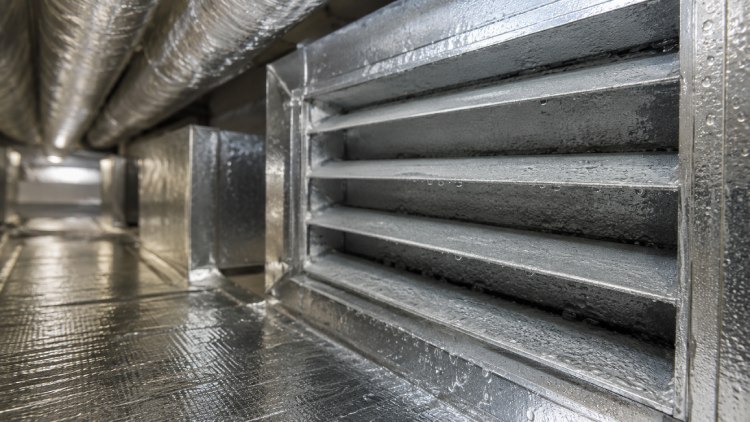
Humidity and Airflow Control help stop mold from returning after cleaning. This section explains humidity targets, dry mode, drain maintenance, airflow balance, and moisture monitoring.
Mold prevention depends on controlling moisture. Without humidity control, duct cleaning may only provide temporary improvement.
Aim to keep indoor humidity ideally between 30% and 50% where practical. In humid UAE conditions, AC dry mode, dehumidifiers, working drains, and proper ventilation can all help.
Practical prevention steps include:
- Use AC dry mode
- Monitor indoor humidity
- Keep humidity below 50% where possible
- Flush drain lines when needed
- Clean drip pans
- Avoid blocking vents
- Keep return grills clear
- Repair water leaks fast
- Replace wet insulation
- Schedule AC maintenance
Poor airflow can create cold spots, condensation, and uneven cooling. That can increase moisture problems around vents or inside AC components.
|
Control Step |
Why It Helps |
|
Dry mode |
Reduces indoor moisture |
|
Clean drain line |
Removes condensate |
|
Open vents |
Improves airflow |
|
Clean filters |
Reduces dust load |
|
Fix leaks |
Stops hidden dampness |
|
Humidity meter |
Tracks risk |
For people with asthma concerns, ac ducts trigger asthma attacks is a useful related guide because mold-sensitive people may react strongly to contaminated airflow.
Humidity control is the long-term defence. Cleaning without moisture control allows the same problem to return.
Professional Cleaning: Safe Removal
Professional Cleaning is needed when mold, musty odour, recurring sinus irritation, or deep duct contamination is suspected. This section explains what safe service should include.
Surface DIY cleaning may remove dust from the vent cover, but it cannot reliably clean deep ducts, coils, drain pans, and internal AC components. It can also spread dust if done with weak tools.
A professional service should use the right method for the duct material. Flexible ducts, fibreglass-lined ducts, and sheet-metal ducts may need different cleaning tools.
A complete service should include:
- Pre-cleaning inspection
- Home protection
- Vent and grill cleaning
- Duct debris removal
- HEPA vacuum extraction
- Mechanical agitation where suitable
- Coil inspection
- Drain pan cleaning
- Drain flushing
- Safe sanitising if needed
- Before-and-after proof
- Maintenance advice
For proper duct cleaning, ac duct cleaning should focus on source removal, not just perfume, fogging, or visible vent wiping.
A trusted cleaning service should also explain whether the issue is dust, mold-like growth, blocked drainage, poor filtration, or humidity.
|
Service Step |
Why It Matters |
|
Inspection |
Finds the source |
|
Containment |
Limits dust spread |
|
Vacuum extraction |
Captures debris |
|
Coil check |
Finds moisture risk |
|
Drain cleaning |
Reduces standing water |
|
Proof photos |
Confirms work |
For mold-specific concerns, air duct cleaning for mold removal can support readers who need a deeper cleaning and remediation-focused approach.
Professional cleaning should solve a cause, not just remove a smell.
Area Coverage for AC Duct Mold and Sinusitis
AC duct mold and sinusitis concerns vary by property type, humidity, AC runtime, dust exposure, and maintenance history. These UAE area sections explain what Ajman, Abu Dhabi, Dubai, and Sharjah residents should check.
Quality Ac Duct Cleaning Service In Ajman
Ajman apartments often use AC for long hours, especially during hot and humid months. When filters, return grills, coils, or drain pans are neglected, musty odour and sinus irritation can become more noticeable.
Residents should check whether symptoms appear more strongly in bedrooms or closed rooms where AC runs overnight. Morning congestion, facial pressure, scratchy throat, or sneezing can point toward indoor air triggers.
A proper Ajman inspection should include vents, filters, return air pathways, coils, and drain pans. If the issue repeats after surface cleaning, deeper duct or coil cleaning may be needed.
Apartment Ac Duct Cleaning In Abu Dhabi
For ac duct cleaning Abu Dhabi, homes and villas should focus on moisture-prone AC components as well as visible vent dust. Abu Dhabi properties can have different duct layouts, FCU positions, and room-by-room airflow patterns.
Residents with sinusitis symptoms should note whether congestion worsens after the AC starts or improves outside the home. That pattern can help the cleaning team target the right areas.
A strong service should include filter checks, vent cleaning, duct inspection, coil review, drain pan cleaning, and post-cleaning proof. Humidity control advice should also be part of the final recommendation.
Apartment Ac Duct Cleaning In Dubai
Dubai homes may deal with fine dust, long AC operating hours, indoor humidity changes, and sealed indoor spaces. These conditions can allow dust and moisture to collect inside the HVAC pathway.
Residents should be cautious about cheap services that only wipe vents or spray fragrance. A proper inspection should confirm whether the odour or sinus trigger comes from filters, ducts, coils, drain lines, or damp insulation.
For apartment residents asking whether air duct cleaning worth applying to them, the answer depends on symptoms, visible contamination, odour, AC usage, and proof from inspection.
Apartment Ac Duct Cleaning In Sharjah
Sharjah families with children, elderly relatives, or sensitive noses should take recurring AC odour and sinus congestion seriously. Dirty AC airflow can be uncomfortable even when it is not the only cause of symptoms.
The cleaning process should include vents, return grills, filters, ducts, coil areas, and drainage points. Any wet insulation, repeated condensation, or blocked drain should be addressed before symptoms keep returning.
For family-focused concerns, dirty air ducts affect can help explain why indoor dust and AC hygiene deserve extra attention around children.
Frequently Asked Questions
1. Can AC duct mold cause sinusitis?
AC duct mold may irritate sinuses and worsen congestion in sensitive people, but sinusitis can have many causes. If symptoms persist, speak with a healthcare provider or ENT specialist.
2. What does AC mold smell like?
AC mold often smells musty, damp, earthy, or mildew-like when the system starts. The odour may be stronger near vents, return grills, or rooms with poor airflow.
3. Why do my sinuses feel worse with AC?
AC can dry nasal passages, circulate dust, or spread mold particles when filters, coils, ducts, or drain pans are dirty. Poor humidity balance may also irritate sinuses.
4. Can changing AC filters help sinus symptoms?
Changing filters may reduce dust and particles, but it may not solve deeper mold inside ducts, coils, or drain pans. Persistent odour or congestion needs inspection.
5. Is DIY duct cleaning safe for mold?
DIY duct cleaning can spread dust or damage duct materials when done incorrectly. diy duct cleaning is not ideal when mold is suspected.

