


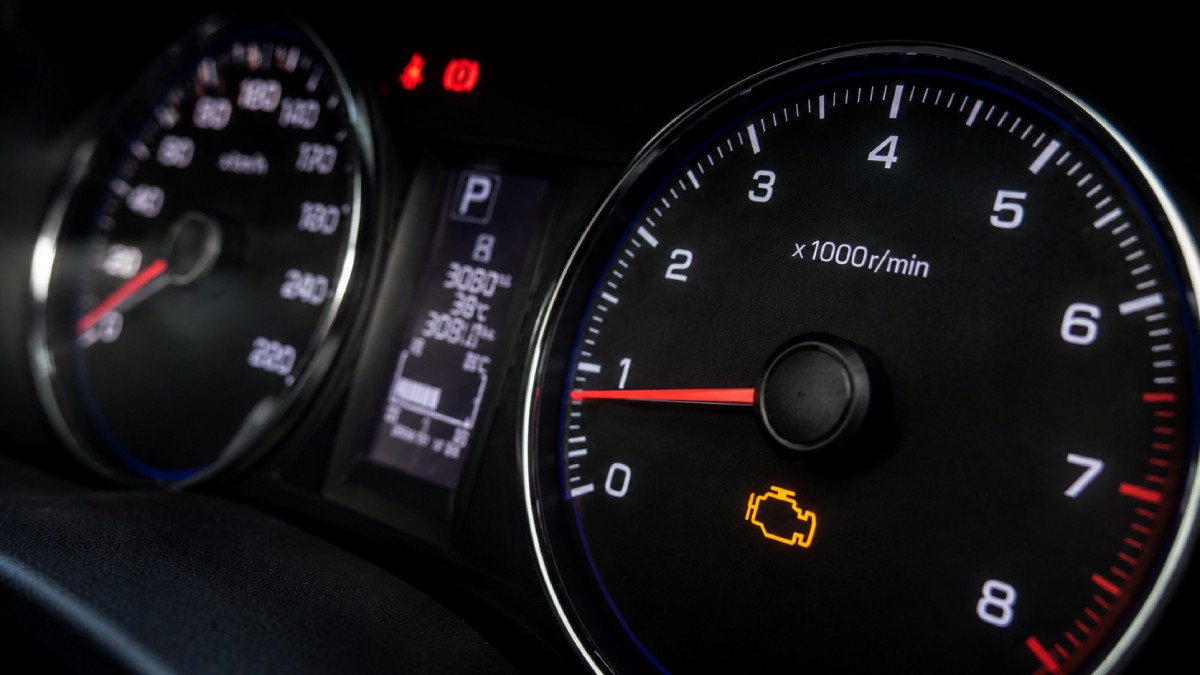
When the warning appears, the first question is simple: Why Is My Check Engine Light On in the UAE? The problem is that the same light can mean very different things. It may be a normal bulb check before the engine starts, a loose fuel cap, a sensor reading outside range, a misfire, or a serious engine fault. Ignoring it can make inspection, emissions, overheating, or repair problems worse.
The right response is not to guess parts. Start by checking whether the light stays on after starting, then scan the car, read the code, match it with symptoms, and test before replacing anything.
If the light stays on after startup, book car repair in UAE so the code can be scanned, tested, and repaired without guesswork.
Why Is My Check Engine Light in UAE? First Checks

The first step is to confirm whether the check engine light is actually abnormal. In many cars, the light comes on when the ignition is switched on before the engine starts. If it disappears after starting, that can be a normal warning-light check, not a confirmed engine problem.
If the light stays on after the engine starts, the car’s onboard diagnostics system has detected a monitored fault. That does not automatically tell you which part to replace. It tells the technician where to begin testing.
|
What You See |
What It Usually Means |
What To Do Next |
|
Light on before startup only |
Often normal bulb/system check |
Start engine and confirm it goes out |
|
Solid light after startup |
Stored or active engine/emissions fault |
Scan OBD-II codes soon |
|
Flashing light |
Possible severe misfire |
Reduce load, stop if symptoms are serious |
|
Light with shaking or rough idle |
Misfire or fuel/ignition issue possible |
Diagnose before driving far |
|
Light returns after clearing |
Root cause was not fixed |
Rescan and test the affected system |
A diagnosis-first approach matters because UAE drivers often face dust, heat, traffic, and long highway trips. Those conditions can make maintenance more important, but they are not a diagnosis by themselves. The fault code, symptoms, and testing should lead the repair.
Solid Check Engine Light in UAE Cars
A solid check engine light usually means the car should be diagnosed soon, especially if it remains on after startup. The car may still drive normally, but that does not prove the fault is harmless. Some emissions, sensor, EVAP, or intermittent faults may not create obvious symptoms at first.
A common mistake is to keep driving for weeks because the car “feels fine.” That delay can turn a small fault into a failed inspection problem or a more expensive repair. If you are also preparing for renewal, review vehicle inspection preparation steps before assuming the light can be ignored.
When the car feels normal, scan first. A stored code may point toward oxygen sensor readings, fuel-trim problems, airflow readings, EVAP leaks, or misfire history. The scan is the start of the diagnosis, not the end.
Flashing Check Engine Light Means Higher Urgency
A flashing check engine light is more urgent than a solid one. It can point to a severe misfire, and a severe misfire can risk catalytic converter damage if the car continues under load. In this case, do not treat the warning as a routine reminder.
Reduce speed, avoid hard acceleration, and pay attention to shaking, smoke, overheating, rough idle, or power loss. If the car is running badly, it should not be pushed across long UAE routes just to “see if it clears.” That is when immediate diagnosis matters.
Misfire symptoms can come from several areas. Spark plugs are one possibility, but coils, injectors, fuel pressure, sensor readings, wiring, or mechanical faults can also be involved. A focused scan helps connect the flashing light with misfire and rough idle causes.
Car Shaking With Check Engine Light
When the check engine light appears with shaking, hesitation, or rough idle, misfire becomes more likely. A misfire means one or more cylinders are not burning fuel correctly. That can make the engine feel uneven, weak, or unstable at idle.
Spark plugs and ignition coils are common items to inspect, but they should not be replaced blindly. The code may identify a cylinder, a random misfire, or a related system condition. From there, the technician should test ignition, fuel delivery, compression where needed, and sensor inputs.
UAE heat can make weak components show up sooner, especially during traffic or long drives. If the fault appears together with poor starting, hesitation, or sudden power drop, fuel pump failure signs may also be relevant to the diagnosis.
Loose Fuel Cap and EVAP Faults
A loose fuel cap can trigger a check engine light because the EVAP system monitors fuel-vapour leakage. This is one of the simple checks worth doing before assuming a major engine problem. Tighten the cap properly and check whether the warning returns after normal driving.
That said, do not keep clearing the code if the light keeps coming back. EVAP faults can also involve hoses, valves, seals, or sensor readings. A code can tell the technician whether the system is seeing a small leak, large leak, purge fault, or another monitored condition.
This is where drivers should avoid guessing. A small EVAP code and a rough-idle misfire code do not have the same meaning. The correct repair depends on the exact code and test result.
Dust, Air Filters, and Sensor Readings
Dusty driving in the UAE can make air filtration more important, but dust alone should not be blamed as the cause of every check engine light. A dirty air filter can contribute to airflow problems, and contamination around the air-mass sensor may affect readings when symptoms or codes support that direction.
The practical step is simple: inspect the air filter, intake path, and airflow sensor data when the scan points that way. If the filter is heavily dirty, replacing it is sensible maintenance. But replacing sensors without checking live data can waste money.
UAE summer conditions can also expose weak cooling, electrical, and rubber components. For broader context, compare the warning light with UAE summer failure patterns rather than assuming heat is the diagnosis.
Check Engine Light After Recent Service
If the check engine light appears soon after service, engine work, or part replacement, tell the technician exactly what was done. A disturbed connector, loose hose, unplugged sensor, damaged wire, or intake leak can become a useful diagnostic clue.
This does not mean the previous work definitely caused the warning. It simply narrows the first inspection points. The scan code should still guide testing because the same light could appear after service for an unrelated reason.
Ask for the actual diagnostic trouble code before approving more work. For Dubai drivers, a proper Dubai OBD scan and code reading can help separate a real fault from a loose connection or incomplete repair.
Check Engine Light After Buying a Used Car
A check engine light that appears shortly after buying a used car in the UAE deserves careful attention. A seller may have cleared codes, or an intermittent fault may only return after enough driving. Either way, do not assume the car is fine because the light was off during viewing.
A pre-purchase inspection should include an OBD scan, test drive, and mechanical inspection. If the car has recently cleared readiness monitors, that can also be a red flag before purchase or registration testing. Buyers should treat the warning as evidence to investigate, not a reason to panic immediately.
Before approving major work, collect the code, symptoms, vehicle history, and inspection findings. This is also where complete repair workflow in UAE can help you understand what a structured diagnosis should include.
When the Check Engine Light Returns?
If the check engine light returns after being cleared, the underlying fault was probably not solved. Clearing a code only erases the warning temporarily. It does not repair a leak, misfire, sensor issue, fuel problem, or mechanical fault.
A returning light should be scanned again, even if the previous garage already replaced one part. The new scan may show the same code, a related code, or a different fault. That difference matters because one symptom can have multiple causes.
For serious symptoms such as knocking, overheating, smoke, coolant loss, or repeated misfire, compare the warning with serious engine damage indicators. If the fault points to deeper internal damage, engine overhaul decision factors may become relevant.
Codes Are Evidence, Not a Parts List
An OBD-II code helps identify the system or condition involved in the check engine light. It does not always prove one specific part has failed. For example, a sensor-related code may be caused by wiring, leaks, fuel mixture issues, or another component affecting the reading.
This is why UAE drivers should ask garages for the code and the reasoning behind the repair. A good diagnosis explains what was tested, what failed, and why the recommended part is connected to the fault. That is different from replacing parts because the code mentions a sensor.
|
Diagnostic Step |
Why It Matters |
What To Ask |
|
Read stored codes |
Finds the monitored fault area |
What exact code appeared? |
|
Check freeze-frame data |
Shows conditions when fault occurred |
When did the fault trigger? |
|
Inspect symptoms |
Confirms urgency and direction |
Is there misfire, heat, smoke, or power loss? |
|
Test related parts |
Prevents unnecessary replacement |
What test confirmed the part failed? |
|
Rescan after repair |
Confirms the fault is resolved |
Did the code return after road testing? |
For Sharjah drivers,Sharjah fault-code checks are most useful when paired with clear symptoms and proper testing. The aim is to repair the cause, not just switch off the warning.
Heat, Overheating, and the Warning Light
A check engine light can appear alongside overheating, but the two warnings should not be confused. If the temperature gauge rises, steam appears, or coolant drops, the priority is to prevent engine damage. Continuing to drive an overheating vehicle can be much more serious than a routine emissions code.
Overheating can involve the radiator, coolant leaks, thermostat, water pump, fans, hoses, or head-gasket problems. The check engine code may provide clues, but the cooling system must be inspected directly. For symptoms tied to temperature, engine overheating warning patterns are more relevant than a generic sensor replacement.
UAE summer traffic can make small cooling weaknesses show up faster. Use summer overheating prevention steps and radiator failure signs to understand when the warning light is part of a wider cooling issue.
Spark Plugs, Coils, and Misfire Codes

Spark plugs can trigger or contribute to a check engine light when they are worn, fouled, incorrectly gapped, or overdue for replacement. Ignition coils can also cause misfire symptoms. But the right repair depends on the code, cylinder data, and testing.
A single-cylinder misfire may lead the technician toward that cylinder’s plug, coil, injector, compression, or wiring. A random misfire can require a broader look at fuel delivery, vacuum leaks, air measurement, or mechanical condition. The scan narrows the path but does not replace diagnosis.
If the car shakes, hesitates, or loses power, check whether maintenance is overdue. For planning, spark plug replacement timing can help drivers understand when ignition wear becomes more likely.
Before UAE Vehicle Inspection
A check engine light should be addressed before vehicle inspection because unresolved engine or emissions faults can create inspection problems. Dubai vehicle testing includes exhaust-emissions checks, so clearing the code without fixing the cause is risky.
The issue is not only whether the dashboard light is visible. The car may have stored codes, incomplete readiness monitors, or emissions-related faults that return during normal driving. If a vehicle was recently repaired, it may need proper road testing before inspection.
Repair decisions should still be based on evidence. For Abu Dhabi drivers, Abu Dhabi engine fault checks can help confirm whether the fault has been fixed before renewal, inspection, or longer intercity driving.
Repair Estimate Factors for CEL Problems
The repair cost for a check engine light can vary widely because the warning does not identify one fixed repair. A loose fuel cap, spark plug issue, oxygen sensor problem, fuel pump fault, cooling issue, or internal engine problem will not have the same labour or parts requirement.
Avoid accepting a large quote until the garage explains the code, tests, and evidence. A reliable process should show why the proposed repair matches the fault. If the light returns after replacement, the diagnosis may need to be reopened rather than repeated.
To understand why pricing changes by fault type, vehicle model, parts, and labour, review vehicle repair estimate factors. Use it as budgeting context, not as a substitute for scanning and testing the actual car.
Why Is My Check Engine Light in UAE? Area Coverage
Local driving conditions matter because the check engine light often appears during real use: heat, traffic, inspection timing, dusty roads, and long routes between emirates. The same warning still needs code-based diagnosis, but local context helps technicians prioritize the right checks.
UAE Check Engine Light Support
Across the UAE, drivers should treat a persistent check engine light as a diagnosis issue rather than a guessing game. Dust, heat, city traffic, and highway driving can all influence when weak parts show symptoms, but the fault code and physical testing should decide the repair. UAE-wide support is most useful when drivers need scanning, symptom review, and repair direction before the warning becomes a renewal, emissions, or breakdown problem.
Abu Dhabi Check Engine Light Support
In Abu Dhabi, a check engine light can become more concerning before long-distance driving, commuting, or inspection preparation. The practical need is to confirm whether the light is solid, flashing, intermittent, or paired with overheating, rough idle, or power loss. Diagnosis should start with OBD scanning and continue with targeted tests, especially when the vehicle has recently been serviced or the warning has returned after clearing.
Dubai Check Engine Light Support
Dubai drivers often deal with heavy traffic, used-car purchases, and inspection timing, which makes a check engine light especially inconvenient. If the light appears after buying a car, after service, or before renewal, the safest next step is to capture the fault code and test the affected system. A scan-first process helps avoid unnecessary parts replacement and gives the driver clearer evidence before approving repairs.
Sharjah Check Engine Light Support
In Sharjah, a check engine light should be checked early when it appears with shaking, hesitation, or rough idle. Those symptoms can point toward misfire, fuel delivery, or ignition-related issues, but the code still needs interpretation. Local support is useful when drivers need a practical fault-code check, road-test confirmation, and repair advice before the issue worsens during daily commuting.
Ajman Check Engine Light Support
Ajman drivers should not ignore a check engine light simply because the vehicle still moves normally. A steady warning can still involve emissions, airflow, EVAP, or intermittent faults, while a flashing warning needs faster attention. Diagnosis is especially important if the car has recent maintenance history, repeated warnings, or symptoms such as poor acceleration, abnormal idle, or rising engine temperature.
A check engine warning is easier to handle when the repair starts with evidence. Scan the code, compare it with the symptoms, test the suspected system, and only then approve parts. If the light is solid, flashing, or keeps returning, use car repair in UAE to get a diagnosis-led repair path instead of repeated code clearing. That approach protects the engine, reduces guesswork, and helps you prepare for inspection with more confidence.
FAQs
Why is my check engine light on even though my car drives normally?
A check engine light can stay on even when the car drives normally because some monitored faults do not create immediate drivability symptoms. EVAP leaks, oxygen sensor readings, airflow problems, fuel-trim faults, or intermittent sensor signals may trigger a warning before the driver feels anything. The car feeling normal is useful information, but it does not prove there is no fault. The right step is to scan the code, check whether the light is solid or flashing, and diagnose the affected system.
What is the difference between a solid and flashing check engine light?
A solid check engine light usually means the car needs diagnosis soon, especially if it remains on after startup. A flashing light is more urgent because it can point to a severe misfire that may damage the catalytic converter. If the light flashes with shaking, power loss, smoke, overheating, or unusual noises, reduce load and stop driving when necessary. The difference matters because a flashing warning changes the urgency of the response.
Is it normal for the check engine light to appear before starting?
A check engine light that appears when the ignition is on but the engine is not running can be part of the normal bulb or system check. The key detail is whether it disappears after the engine starts. If it goes out, that may not indicate an active fault. If it stays on after startup, the onboard diagnostics system has detected a fault condition and the car should be scanned.
Can a loose petrol cap cause the check engine light?
Yes, a loose petrol cap can trigger a check engine light because the EVAP system monitors fuel-vapour leaks. Tightening the cap is a simple first check when there are no serious symptoms. However, if the light stays on or returns, the issue may involve another EVAP component, seal, hose, valve, or sensor reading. Do not keep clearing the warning without confirming the exact fault code.
Why did my check engine light return after the garage cleared it?
A returning check engine light usually means the root cause was not repaired. Clearing the code removes the warning temporarily, but it does not fix a misfire, leak, sensor fault, wiring issue, fuel problem, or mechanical defect. The next step is to rescan the vehicle and compare the new code with the previous one. If the same code returns, the affected system needs proper testing rather than another reset.
Can dust or a dirty air filter trigger a check engine light in the UAE?
Dust and a dirty air filter can contribute to check engine light problems when they affect airflow measurement or related sensor readings. This is more likely when the fault code, symptoms, and inspection point toward intake or air-mass measurement issues. Dust should be treated as context, not as the diagnosis by itself. The technician should inspect the filter, intake path, and sensor data before replacing parts.
Should I get a second opinion before major engine repairs?
A second opinion is sensible when a check engine light leads to a large repair quote, especially if the garage has not shown the exact code, test result, or diagnostic reasoning. Codes identify a fault condition or system, not always one failed part. Before approving expensive engine, catalytic, injector, or sensor work, ask what was tested and why the repair matches the fault. Clear evidence reduces the risk of unnecessary replacement.
Can a check engine light affect UAE vehicle inspection?
A check engine light can affect inspection preparation because unresolved engine and emissions faults may create testing problems. Dubai vehicle testing includes exhaust-emissions checks, so clearing a warning without fixing the cause is not a reliable plan. The vehicle may also need readiness monitors to complete after repair. The better approach is to diagnose the code, fix the fault, road-test the car, and confirm the warning does not return.

