


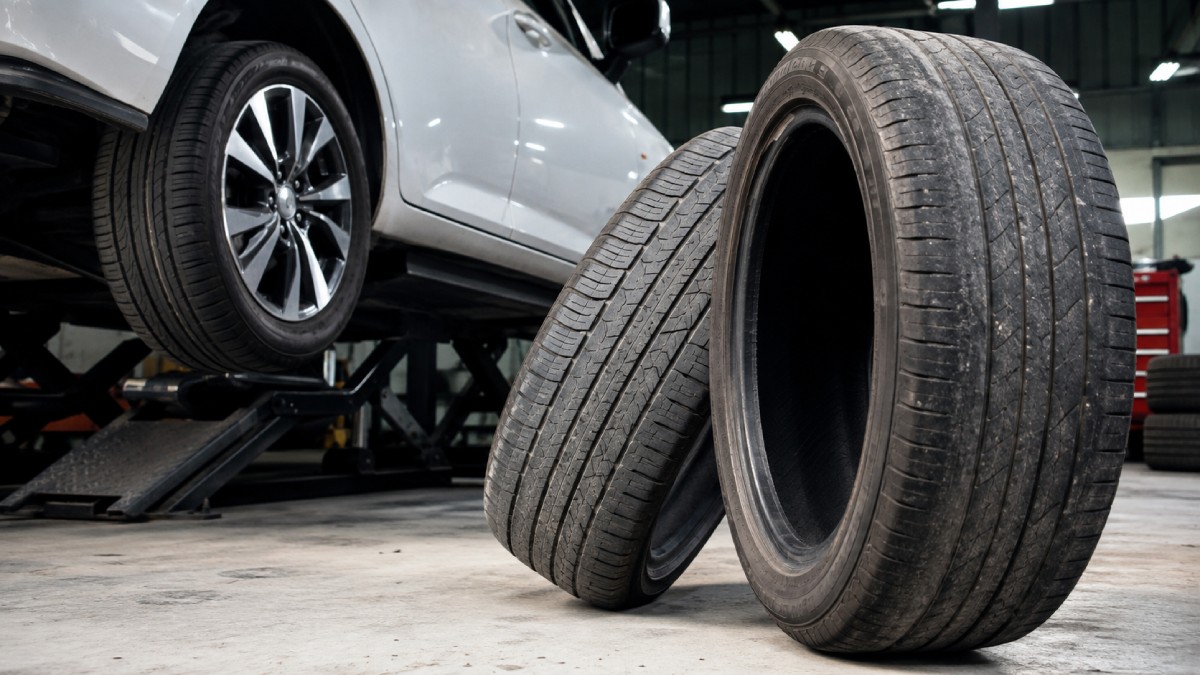
Many drivers ask when they should replace their car tyres in the UAE because the answer isn't always visible on the tread. A tyre can look usable, yet be too old, repaired too many times, cracked by heat, or close to failing inspection. In UAE driving conditions, the safer answer comes from checking the tyre’s manufacturing date, tread depth, damage, mileage, repairs, pressure, and wear pattern together. The supplied research highlights this exact driver concern, especially around 4-year-old tyres with high mileage and repeated puncture repairs.
Quick Check: Before you delay replacement, book a tyre replacement and alignment check in UAE so the tyre age, tread, repairs, and wear pattern are reviewed together.
When Should I Replace My Car Tyres UAE?

You should replace car tyres in the UAE when they reach the 5-year tyre age limit, drop to unsafe tread depth, show cracks or bulges, have sidewall or shoulder damage, or feel unsafe at highway speed. RTA’s current renewal service information says tyres are valid for a maximum of 5 years from the date of manufacture.
|
Tyre factor |
Replace immediately? |
What to check |
|
Tyre age over 5 years |
Yes |
DOT manufacturing date on sidewall |
|
Tread at 1.6 mm |
Yes |
Legal minimum tread threshold |
|
Tread near 3 mm |
Consider early |
Safer margin for highway and summer driving |
|
Bulge, deep cut, sidewall crack |
Yes |
Structural damage risk |
|
Multiple puncture repairs |
Often advisable |
Repair location, tyre age, and highway use |
|
Uneven wear, vibration, pulling |
Inspect first |
Alignment, balancing, suspension, tyre shape |
The 1.6 mm tread-depth limit is a common minimum threshold, and tyre manufacturers also describe 1.6 mm as the minimum tread depth. In UAE heat, waiting until the final millimetre is not always the most practical choice, especially if the tyres are old, heavily used, or driven on highways.
Tyre Date Matters More Than Looks
Start with the tyre manufacturing date before judging the tread by eye. The DOT code on the sidewall usually ends with four digits, where the first two digits show the week and the last two show the year, such as 2423 for the 24th week of 2023.
For When Should I Replace My Car Tyres UAE, this date matters because rubber ages even when the tread still looks deep. A tyre fitted late in its life can be “new” to your car but old by manufacturing date, which is why UAE drivers should check the date before buying replacements.
If the tyre is close to 5 years old, do not wait for visible failure. Plan replacement before inspection, long highway trips, or summer travel, especially if you already see cracking, repairs, or uneven wear.
UAE Heat Speeds Up Tyre Ageing
UAE heat makes tyre ageing more serious because rubber is exposed to high surface temperatures, UV exposure, and long road use. That does not mean every tyre must be changed after 2 years, but it does mean a 3–4 year old tyre needs a closer inspection.
The supplied driver research shows many UAE motorists replace earlier when tyres have high mileage, puncture repairs, cracks, or highway use. This is practical safety judgement, not the official maximum age rule.
A good rule is simple: if the tyre is old and has another warning sign, replace sooner. A 4-year-old tyre with 100,000 km, repairs, or shoulder damage deserves a different decision than a lightly used tyre with clean tread and no damage.
Tread Depth Is Not a Guess
Tread depth should be measured, not judged from a quick glance. A tyre can look acceptable from above while the inner shoulder is worn, the tread is close to the indicator bars, or the wear is uneven across the surface.
For When Should I Replace My Car Tyres UAE, the legal minimum is only part of the decision. If your tyre is near the tread wear indicators, replacement should be planned before wet roads, highway drives, or inspection timing makes the problem urgent.
Use tread wear indicators as a quick visual check. If the tread is level with the bars, the tyre has reached the point where replacement is no longer optional.
Mileage Is a Warning, Not a Fixed Rule
There is no single mileage number that fits every UAE driver. Tyre life changes with driving style, car weight, tyre quality, rotation habits, wheel alignment, road conditions, and heat exposure.
The supplied research includes a real driver concern around tyres with about 110,000 km, which other UAE drivers treated as very high for local weather. That is why mileage should be used as a warning sign, not as the only rule.
A cautious driver may replace around 50,000 km in hot conditions, while another vehicle may wear sooner because of poor alignment. The safer method is to combine mileage with age, tread depth, damage, repair history, and highway use.
Damage That Means Replacement
Replace the tyre immediately if you see a bulge, exposed cord, deep cut, sidewall crack, shoulder split, or visible deformation. These are not normal wear issues because they can point to structural weakness inside the tyre.
Sidewall and shoulder damage are especially serious because those parts flex under load. A small-looking cut in that area can be more concerning than a repairable puncture in the centre of the tread.
If a garage says the tyre “looks fine,” ask for a proper inspection while the wheel is rotated and checked closely. Hidden bumps, inner wear, and shoulder cracking are easy to miss during a quick look.
Puncture Repairs Lower the Safety Margin
One small puncture in the central tread may be repairable if the tyre is otherwise healthy. Multiple puncture repairs on an old or high-mileage tyre should lower your replacement threshold.
For When Should I Replace My Car Tyres UAE, repair history matters because UAE drivers often use high-speed routes. A repaired tyre that feels acceptable in city driving may not be the tyre you want to trust on long summer highway trips.
Do not repair sidewall or shoulder damage as a routine fix. If the damage is outside the safe repair zone, replacement is the better decision.
Uneven Wear Points to Alignment Issues
Uneven tyre wear usually means the tyre is not the only problem. It can be linked to wheel alignment, balancing, suspension wear, tyre pressure, or a damaged tyre structure.
If the car pulls, vibrates, or wears one shoulder faster than the other, review wheel alignment and balancing differences before fitting new tyres. Fitting new tyres without correcting the cause can make the new set wear badly too.
Drivers in Dubai who notice steering pull, vibration, or shoulder wear can arrange a tyre condition check and car service in Dubai to inspect the tyre condition with alignment-related symptoms. This is especially useful before inspection or long-distance driving.
Suspension Can Destroy Good Tyres
Suspension problems can make tyres wear unevenly even when the tyres are not old. Worn shocks, damaged control arms, weak bushings, or steering issues can create cupping, vibration, and unstable handling.
If tyre wear appears in patches or the car feels unstable over bumps, compare the symptoms with suspension damage signs. Tyres should not be replaced in isolation if the car’s suspension is causing the wear pattern.
In Abu Dhabi, where many drivers depend on longer daily routes, a tyre wear and wheel alignment check in Abu Dhabi can help identify whether the tyre problem is age, alignment, or suspension-related. This avoids replacing tyres while leaving the root cause unresolved.
Inspection Timing Should Not Decide Safety
Vehicle inspection is a deadline, not the only reason to replace tyres. If tyres are over the 5-year maximum from manufacture, inspection failure becomes a real concern, but safety should come first.
Before renewal, review vehicle inspection preparation checklist items such as tyre age, tread condition, visible damage, lights, brakes, and leaks. Tyres that are old, cracked, bald, or damaged should be handled before the inspection date.
For drivers asking When Should I Replace My Car Tyres UAE, the better approach is to inspect tyres before the renewal month. That gives you time to replace them properly instead of rushing into whatever stock is available.
Buying Replacement Tyres in the UAE
When buying tyres, check the manufacturing date before checking the price. A tyre can be unused but still have an old production date, and that reduces the practical life left on the tyre.
Also inspect storage condition. Avoid tyres with cracks, flat spots, deformation, unusual discoloration, or signs of poor storage, especially if they may have been exposed to heat or sunlight.
If you are buying a used vehicle, include tyre age, tread depth, sidewall condition, and repair history in your used car tyre checks. A car with old tyres may need immediate extra spending even if the vehicle looks clean.
Tyre Pressure Before Long Drives

Check tyre pressure when the tyres are cold. Do not copy random pressure numbers from forums because the correct pressure depends on the vehicle manufacturer’s recommendation, load, tyre size, and driving use.
Before highway travel, inspect tread, pressure, sidewalls, and any previous repairs. Old or repaired tyres become a bigger concern when speed, heat, and distance are all involved.
UAE summer also affects more than tyres, so drivers planning long trips should understand UAE summer car part failure patterns. Tyres, cooling, battery, AC, and belts all deserve attention before peak heat driving.
Tyre Replacement Decision Table
|
Situation |
Safer decision |
Reason |
|
5 years from manufacture |
Replace |
UAE tyre validity maximum is based on manufacturing date |
|
3–4 years plus cracks |
Replace early |
Heat ageing and visible rubber damage combine |
|
100,000 km plus repairs |
Replace strongly considered |
High mileage and repair history reduce confidence |
|
Tread at indicator bars |
Replace |
Usable tread margin is gone |
|
Vibration after tyre wear |
Inspect alignment and balancing |
Tyre wear may be caused by another fault |
|
Pulling to one side |
Inspect tyres and steering |
Could be alignment, pressure, or suspension |
|
Sidewall or shoulder cut |
Replace |
Structural area is not a routine repair zone |
|
New tyre with old DOT date |
Avoid or question |
Remaining useful age may be reduced |
This table should be used as a practical filter, not a replacement for inspection. If two or more warning signs appear together, the replacement decision becomes stronger.
In Sharjah, uneven shoulder wear or steering pull can be checked through uneven tyre wear and wheel alignment in Sharjah before tyres are replaced. In Ajman, a tyre wear inspection and alignment check in Ajman helps drivers confirm whether the issue is tyre age, alignment, or wear pattern.
When Should I Replace My Car Tyres UAE Area Coverage

Tyre replacement decisions in the UAE are strongly affected by heat, mileage, inspection timing, and driving habits. Local service access matters because drivers need tyre checks before renewal, highway travel, and visible wear becomes unsafe.
UAE Tyre Replacement and Alignment Support
Across the UAE, tyre replacement should be based on age, tread depth, sidewall condition, puncture history, and wear pattern. Drivers should not wait for the tyre to look completely bald if the DOT date, repairs, or cracking already show risk. UAE-wide tyre checks are useful when drivers want one review that includes tyres, alignment, balancing, suspension clues, and inspection readiness.
Abu Dhabi Tyre Wear and Alignment Support
Abu Dhabi drivers should treat old tyres, uneven wear, and highway vibration as connected checks. If a tyre is wearing on one shoulder, the decision is not only whether to replace the tyre, but whether alignment or suspension is causing the pattern. A tyre inspection can help confirm whether replacement should happen before the next inspection or long-distance drive.
Dubai Tyre Condition and Car Check
Dubai drivers often notice tyre issues through vibration, pulling, pressure warnings, or tread wear during daily use. A tyre that looks fine may still be close to its age limit or affected by heat, previous puncture repairs, or shoulder damage. Checking the tyre date and wear pattern before renewal helps avoid last-minute replacement decisions.
Sharjah Uneven Tyre Wear Support
Sharjah drivers should pay close attention to uneven tyre wear because it can point to alignment or suspension concerns. Replacing tyres without checking the cause may lead to the same wear pattern returning on the new set. A focused tyre and alignment review is useful when the car pulls, vibrates, or wears the inner or outer tread faster.
Ajman Tyre Inspection and Alignment Support
Ajman drivers should replace tyres when the DOT date, tread depth, cracking, bulges, or repeated repairs show reduced safety margin. If the tyre wear is uneven, an alignment check should happen before or during replacement. This helps confirm whether the tyre itself is the issue or whether the vehicle is causing the wear.
Final Tyre Replacement Advice
If you are still unsure When Should I Replace My Car Tyres UAE, do not base the decision on tread appearance alone. Check the DOT date, tread depth, sidewall, shoulder, puncture history, alignment symptoms, and driving pattern together. For a practical next step, schedule a tyre replacement and alignment check in UAE before inspection, summer highway travel, or repeated tyre repairs. A proper check can help you decide whether to replace immediately, monitor closely, or fix an alignment issue first.
FAQs
When should I replace my car tyres in the UAE?
Replace car tyres in the UAE when they are over 5 years from the manufacturing date, reach the tread wear indicators, show cracks or bulges, have sidewall or shoulder damage, or have repeated puncture repairs. You should also replace earlier if the tyres are 3–4 years old and heavily used in heat or on highways.
Should I replace tyres after 5 years even if tread looks fine?
Yes, tyre age still matters even if tread looks fine. RTA’s current renewal information states that tyre validity is a maximum of 5 years from the date of manufacture. Rubber can age from heat, storage, UV exposure, and time, so tread depth alone should not decide tyre safety.
Is 100,000 km too much for the same tyres in the UAE?
100,000 km is very high for one tyre set in UAE driving conditions, especially if the tyres are several years old or have puncture repairs. Mileage is not a legal replacement rule by itself, but high mileage should push you to inspect the DOT date, tread depth, shoulder wear, cracks, and repair history more seriously.
How do I check the manufacturing date on my tyres?
Look for the DOT code on the tyre sidewall and find the final four digits. The first two digits show the production week, and the last two show the production year. For example, 2423 means the tyre was made in the 24th week of 2023, which helps you calculate remaining tyre age.
What is the minimum tyre tread depth in the UAE?
The commonly used minimum tyre tread-depth threshold is 1.6 mm. Once tread reaches this level or meets the tread wear indicators, replacement should not be delayed. For UAE summer driving and high-speed highway routes, many drivers consider replacing earlier so there is more tread margin left.
Does sidewall damage mean the tyre must be replaced?
Sidewall damage usually means the tyre should be replaced rather than repaired. The sidewall flexes while driving and carries load stress, so cracks, bulges, cuts, or exposed cords in that area can point to structural weakness. A central tread puncture may sometimes be repairable, but sidewall and shoulder damage are different.
Why does my car vibrate or pull after tyre wear?
Vibration or pulling after tyre wear can come from uneven tread, wheel imbalance, poor alignment, low or uneven tyre pressure, suspension wear, or tyre deformation. Do not only replace the tyre without checking the cause. If alignment or suspension is creating the wear pattern, the next tyre set may wear unevenly too.
How old can a new tyre be before I should avoid it?
A “new” tyre should still be checked by manufacturing date, not only by unused appearance. If the tyre has been sitting for a long time or shows cracks, deformation, or signs of poor storage, question the purchase. In the UAE, the 5-year validity maximum is counted from manufacture, not from the day you buy it.

