


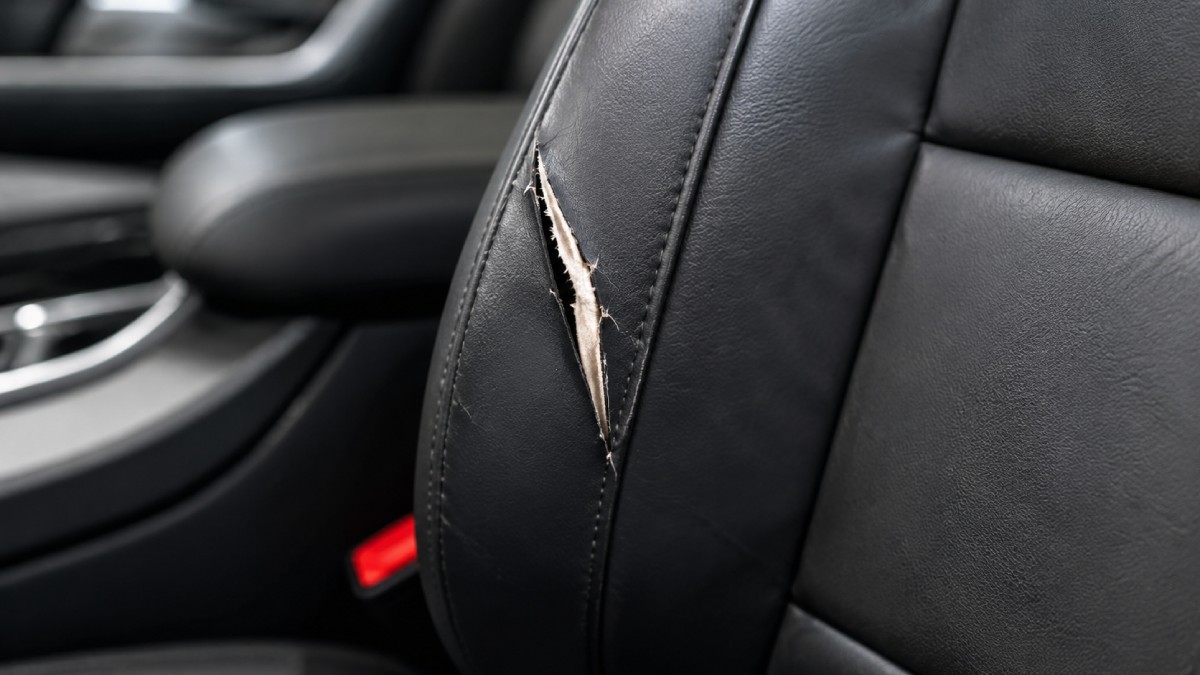
A tear in a leather car seat usually starts small, then spreads because every entry, exit and seated movement pulls against the damaged edge. How to Repair a Tear in a Leather Car Seat? The right answer depends on whether the seat has a surface crack, a true material tear, a seam failure, exposed foam or weakened perforated leather.
A quick filler smear rarely solves the problem on its own. The repair needs inspection, cleaning, reinforcement, surface levelling, grain matching and colour finishing, with professional support when the surrounding upholstery is already failing.
Quick Check: If the tear is spreading, close to a seam or difficult to colour-match, TelusCare can assess car interior repair in UAE before the damage becomes harder to stabilize.
How to Repair a Tear in a Leather Car Seat? Start Here

Leather Seat Tear Decision Table
|
Damage you see |
What it usually means |
Better repair direction |
|
Small straight cut in flexible leather |
Local damage with sound surrounding material |
Clean, insert backing, bond edges, fill lightly |
|
Tear keeps lengthening |
Seat pressure is pulling the split open |
Reinforce from behind before cosmetic work |
|
Split along original stitching |
May be seam failure, not surface tear |
Re-stitch if material is still healthy |
|
Leather torn beside a seam |
Stitch holes or edge material may be weak |
Panel repair or professional upholstery check |
|
Perforated leather split between holes |
The hole pattern may keep tearing |
Careful reinforcement or panel replacement |
|
Foam visible but intact |
Upholstery layer is open, but cushion may remain usable |
Stabilize upholstery before more use |
|
Foam or backing missing |
Damage is deeper than a cosmetic surface issue |
Re-trim or replace the affected panel |
|
Brittle cracking around the tear |
Local patch may fail beside the repair |
Consider panel replacement |
The first step in leather seat repair is to identify the damage type. A surface crack affects the coating or top finish. A material tear means the leather or leather-like upholstery has split. A separated seam means the stitching has failed or pulled apart.
This distinction matters because each leather seat tear needs a different repair method. A clean cut in the middle of a healthy panel can often be stabilized with a backing patch and flexible repair compound. A seam-edge failure or brittle perforated panel may need upholstery work instead of a basic DIY kit.
Before buying products, press lightly around the damaged seat area. If the leather flexes without flaking, cracking or tearing further, a local repair may be realistic. If the surrounding material feels brittle, the problem is bigger than the visible split.
Inspect the Leather Seat Tear Before Repairing It
Look at the tear under good light and separate the edges gently. You are checking whether the leather edges are still present, whether foam is showing, and whether the tear follows a seam or perforation line. A leather car seat tear that follows weak stitch holes is less likely to hold a simple filler repair.
The seat location also matters. Driver-side bolsters tear faster because people slide across them when entering and exiting the car. A tear on a worn bolster usually tells you the surrounding upholstery has been under stress for a long time.
This is also the point to decide whether the damage is part of a wider used-car condition issue. If you are evaluating a second-hand vehicle, include the upholstery in a broader used car interior inspection checklist rather than treating the seat tear as an isolated cosmetic detail.
Clean the Leather Seat Before Any Tear Repair
A leather seat repair needs a clean surface. Seat leather collects body oils, dust, conditioner residue, interior dressing, food particles and old cleaning products. Adhesive and filler will not bond reliably if those contaminants stay on the damaged area.
Clean the area around the tear first, not only the exposed split. Use a leather-safe cleaner, remove residue carefully and allow the upholstery to dry before adding adhesive, backing or colour. Do not trap moisture under a patch.
Degreasing is especially important on driver seats and armrest-side panels. These areas absorb more skin oil and friction residue, so the repair compound can lift if the surface is only wiped quickly. Clean, dry and inspect before moving to the next step.
Stop a Leather Seat Tear From Spreading
A spreading leather seat tear needs reinforcement, not just colour. When people continue sitting on the damaged seat, the split opens wider and stress concentrates at both ends of the tear. That is why small cuts should be handled before they become long panel failures.
For a small tear, reduce pressure on the area where possible. Avoid sliding across the damaged section, especially on the side bolster. If the tear is on a frequently used seat, temporary protection may help limit movement until the repair is done.
A backing patch is often the practical way to stop the tear from spreading. The backing sits under the leather and extends beyond the damaged edges, giving adhesive and filler something stronger to bond to. Without that support, filler on the surface can crack when the seat flexes.
Use a Backing Patch Behind the Leather Tear
A leather car seat tear usually needs support from underneath when the material has opened through the surface. The backing patch should be larger than the tear so the load spreads into sound upholstery instead of pulling only on the torn edge. This is especially useful when the tear is longer than a tiny nick.
Insert the backing carefully through the opening. Keep it flat under the damaged leather and avoid bunching it up, because any lump may show through the finished surface. Once positioned, the torn edges can be bonded down to the backing.
Do not overfill the repair. The filler should restore the seat surface level, not create a raised ridge. A repair that sits higher than the surrounding leather will catch light differently and may be more visible than the original tear.
Should You Patch, Sew or Replace the Leather?

Leather Seat Repair Method Comparison
|
Repair method |
Works better when |
Main risk |
|
Backing patch and adhesive |
Tear is small to moderate and edges are intact |
Weak bond if leather is dirty or oily |
|
Flexible filler |
Surface needs levelling after backing |
Raised or cracked finish if applied too thick |
|
Stitching |
Seam has opened or material is strong enough |
New needle holes can worsen weak leather |
|
Panel replacement |
Tear is large, brittle, perforated or near seams |
Requires upholstery skill and material matching |
|
Full cover replacement |
Multiple panels are damaged or foam/backing is poor |
Higher scope than a local repair |
Patching is usually the first option for a small material tear in otherwise healthy leather. The goal is to stabilize the split from behind, align the edges and use flexible filler only where the surface needs levelling. This keeps the repair focused on the damaged area.
Sewing can work when the leather is strong enough to hold stitches. It is more suitable for an opened seam or a tear where there is enough healthy material around the split. It is risky on brittle leather because every needle hole adds another weak point.
Replacement becomes more sensible when the tear sits beside a seam, runs through perforated leather, exposes missing foam or sits inside a brittle panel. In those cases, a local repair may look acceptable for a short time but fail next to the patched area.
Can You Sew a Tear in a Leather Car Seat?
Yes, but sewing a leather seat tear is not always the safest repair. If the material is flexible, thick enough and not crumbling, careful stitching may hold. If the leather is thin, dry, perforated or already splitting along holes, stitching can turn one tear into several smaller failures.
A separated seam is different from torn leather. If the original seam thread has broken and the leather around the stitch holes is still sound, re-stitching may be possible. Reusing existing holes may reduce unnecessary new punctures.
A tear beside a seam is more complicated. There may not be enough strong material left to hold thread tension. For visible seats or newer interiors, a professional upholstery assessment is often safer than learning stitching technique on the actual seat.
How to Repair Perforated Leather Seat Tears
Perforated leather is harder to repair discreetly because the hole pattern matters. Filler can block holes, stitching can pull through weakened perforations, and colour differences are easier to spot across repeated openings. A repair that works on smooth leather may look obvious on perforated panels.
If the tear runs between perforations, inspect the surrounding hole pattern. When several holes are stretched or splitting, the panel may be deteriorating beyond the single visible tear. A patch can stabilize some damage, but it may not restore the perforation pattern cleanly.
For a high-visibility perforated seat, consider professional help early. TelusCare can review Dubai car interior repair checks when the repair needs both structural support and a cleaner visual finish.
Repairing a Leather Seat Tear Near a Seam
A leather seat tear near a seam needs careful inspection because the seam area carries tension. If the leather has pulled away from the stitching line, filler alone may not hold. The repair may need stitching, panel work or replacement of the damaged section.
If the seam itself has opened but the leather is healthy, the repair may be closer to upholstery stitching than surface repair. If the leather has ripped through the stitch holes, the material edge may be too weak to reuse. That changes the repair plan.
For vehicles used daily in the capital, a local assessment for Abu Dhabi car seat repair can help decide whether the seam can be saved or the affected panel needs a stronger fix.
What If Foam Is Showing Under the Tear?
Visible foam does not automatically mean the leather seat must be replaced. If the foam is intact and the leather edges are still present, the outer upholstery may be stabilized with backing and flexible repair materials. The key is to stop further movement before the tear expands.
If foam, backing and upholstery material are missing, the repair becomes more than surface work. There may not be enough leather left to close neatly, and filler cannot rebuild missing structure on its own. That is when re-trimming or panel replacement becomes more realistic.
Avoid pressing filler deep into exposed foam as a shortcut. The surface still needs controlled support behind the leather layer, edge alignment and a finish that can flex with the seat.
Make the Leather Seat Repair Less Visible
A neat leather seat repair depends on edge alignment, filler level, grain texture, colour and sheen. Closing the hole is only the structural part. The visible result depends on whether the repaired area blends into the original panel.
Build colour gradually instead of trying to cover the repair in one heavy coat. A thick colour layer may look darker, shinier or flatter than the surrounding seat. Matching gloss is just as important as matching the shade.
Grain also matters. A smooth filler spot on textured leather can stand out even when the colour is close. If the seat has a visible grain, the repair needs texture work before the final colour and finish.
When DIY Leather Seat Repair Is Reasonable
DIY leather seat repair is more reasonable when the tear is small, the surrounding upholstery is flexible and the owner accepts that the result may remain slightly visible. A clean cut in the middle of a healthy panel is a better candidate than a brittle seam-edge split.
DIY is also more reasonable when the vehicle is older and the goal is to stop spreading rather than make the seat look factory-new. Practice with filler, colour and texture on scrap material if possible before working on the visible seat.
If the repair is part of wider maintenance, compare the seat work with the overall vehicle condition. A broader complete car repair workflow can help separate cosmetic upholstery issues from mechanical, safety and inspection-related items.
When Professional Leather Seat Repair Is Better
Professional leather seat repair is better when the seat is valuable, highly visible, perforated, badly worn, close to a seam or difficult to colour-match. The risk is not only that a DIY repair fails. The risk is that it leaves hardened filler, mismatched colour or extra holes that make the next repair harder.
Professional help is also sensible when the leather keeps tearing beside previous repairs. That usually means the surrounding material is no longer strong enough for another small patch. Replacing one damaged panel may be more durable than repeatedly filling the same area.
For northern emirate customers, TelusCare can review Sharjah car seat repair support when the tear needs reinforcement, finishing or panel-level attention.
Leather Seat Repair and UAE Car Checks
A leather seat tear is usually treated as an interior condition issue, but many car owners fix upholstery while preparing the vehicle for sale, inspection or renewal. In that situation, do not let a cosmetic seat repair distract from mechanical and safety checks.
Before spending time on interior finishing, review broader vehicle inspection requirements so the vehicle is not delayed by issues unrelated to the seat. Upholstery repair can improve comfort and presentation, but inspection preparation may involve separate safety items.
The same applies before registration renewal. A practical set of renewal test preparation steps helps place leather seat repair inside the wider maintenance plan instead of treating it as the only task.
How to Repair Tear in Leather Car Seat? Area Coverage

Local repair support matters because seat damage is easier to manage before daily use turns a small split into a wider upholstery problem. TelusCare covers UAE car owners who need practical inspection, interior repair direction and location-specific service access.
UAE Car Repair Services
Across the UAE, leather seat repair starts with the same core decision: is the damage a clean tear, seam failure, brittle panel or deeper upholstery problem? UAE customers can use TelusCare for car interior repair when the seat needs assessment before patching, stitching, filling or panel replacement.
Abu Dhabi Car Repair Services
In Abu Dhabi, leather car seat repair is useful when a tear appears on a daily-use vehicle and the owner wants to stop the damage from spreading. The repair direction depends on whether the damaged seat panel is still flexible, whether the seam is involved and whether the colour finish can be matched cleanly.
Dubai Car Repair Services
In Dubai, car interior repair support can help with visible leather seat damage on driver seats, passenger seats and worn side bolsters. A proper check separates small repairable cuts from perforated, brittle or seam-edge tears that may need upholstery-level work.
Sharjah Car Repair Services
In Sharjah, leather seat tear repair should focus on stabilizing the damaged area before repeated use pulls the material open. If the tear sits near stitching or the surrounding leather is already cracking, the better solution may be panel work rather than a surface-only patch.
Ajman Car Repair Services
In Ajman, car owners dealing with torn leather seats can benefit from checking the full condition of the upholstery before applying adhesive or filler. TelusCare can help identify whether a local repair is enough or whether the damaged panel needs stronger restoration.
Final Advice on Repairing a Leather Seat Tear
A leather car seat tear should be repaired based on material condition, not guesswork. Small healthy tears may be patched, reinforced and blended. Seam-edge damage, perforated splits, brittle leather and missing foam usually need a more careful repair plan.
If the tear is visible, spreading or close to stitching, TelusCare can assess car interior repair in UAE and help choose between local repair, upholstery work or panel replacement. That keeps the focus on a durable fix rather than a quick cover-up that fails under normal seat movement.
FAQs About Leather Car Seat Tear Repair
How do I stop a leather car seat tear from spreading?
To stop a leather car seat tear from spreading, reduce pressure on the damaged section and avoid sliding across the split. Then clean the area and inspect whether the surrounding material is still flexible. If the tear has opened through the surface, a backing patch behind the leather usually gives the torn edges support so stress is spread into stronger material instead of pulling directly on the split.
Can a small tear in a leather car seat be repaired?
A small tear in a leather car seat can often be repaired if the surrounding upholstery is healthy. The repair usually involves cleaning, placing a backing patch beneath the tear, bonding the edges, applying flexible filler only where needed and then matching grain, colour and finish. The repair may still remain slightly visible, especially if the leather has a strong texture, perforation pattern or unusual colour.
Should I patch or sew a torn leather car seat?
Patch a torn leather car seat when the split is in the material and the edges need support from behind. Sewing may be suitable when an existing seam has opened and the leather around the stitch holes is still strong. Sewing is risky when the leather is brittle, thin or perforated because new needle holes can create more weak points. The repair choice depends on material strength and tear location.
Can sewing make a leather seat tear worse?
Yes, sewing can make a leather seat tear worse when the upholstery is weak. Each stitch creates a hole, and weak leather may split between those holes when someone sits down. Sewing is safer when the leather is flexible and there is enough sound material around the tear. If the tear sits beside a seam or perforation line, panel repair may be more durable than adding new stitching.
How do you repair a leather car seat with a backing patch?
To repair a leather car seat with a backing patch, clean and dry the damaged area first. Insert a flexible backing piece beneath the tear and position it flat so it extends beyond the split. Bond the leather edges to the backing, let the adhesive cure as directed, then apply a thin layer of flexible filler if the surface needs levelling. Finish with grain texture, colour and protective topcoat.
How do you repair a tear in perforated leather seats?
A tear in perforated leather seats is harder to hide because the hole pattern must remain visually consistent. Filler can block perforations, and stitching may pull through weak holes. Start by checking whether the tear is isolated or whether nearby perforations are also splitting. A small tear may be stabilized carefully, but larger or spreading perforated-panel damage often needs upholstery repair or replacement of the affected panel.
Why will leather repair glue not stick to my car seat?
Leather repair glue may not stick to a car seat because the surface still has oils, dirt, conditioner, silicone dressing or cleaner residue on it. Adhesive needs a clean and dry contact area. Driver seats are especially likely to have skin oils and friction residue. Clean and degrease the area properly, allow it to dry, and avoid applying adhesive over old filler, loose coating or greasy leather.
When should a torn leather seat panel be replaced?
A torn leather seat panel should be considered for replacement when the tear is large, close to a seam, running through perforations, surrounded by brittle cracks or combined with missing backing or foam. Replacement may also be better when previous repairs have failed. In those cases, a small patch may close the visible split but not solve the weakness in the surrounding upholstery.

