


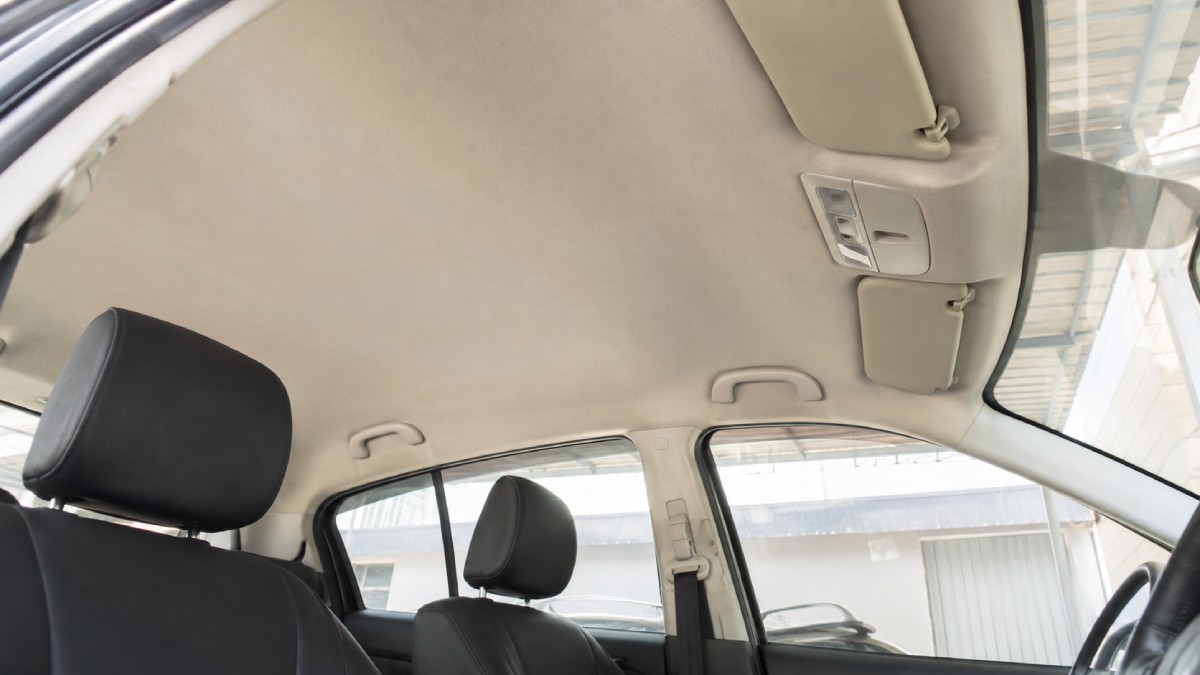
A sagging roof liner usually starts as a small loose patch, but it can quickly turn into fabric hanging over the driver’s view. How To Repair a Car Ceiling Headliner? The answer depends on what has failed behind the fabric.
If the foam backing is still stable, a small edge repair may hold. If the foam has turned powdery, glue alone will not solve the problem. The right repair starts with checking the foam, choosing between a temporary hold and a full re-cover, then using proper automotive headliner material and adhesive.
Quick Check: Before spraying more adhesive onto loose fabric, use TelusCare’s car headliner repair in UAE check to confirm whether the foam, board, or adhesive has failed.
How To Repair a Car Ceiling Headliner? Start Here

A car ceiling headliner is usually built from three parts: the visible fabric, a foam backing, and a rigid board above it. When the foam backing breaks down, the fabric loses support and starts to sag. That is why the first step in How To Repair Car Ceiling Headliner? is not buying glue; it is finding out whether the foam is still strong enough to bond.
Headliner Repair Decision Table
|
Headliner condition |
What it usually means |
Practical repair path |
|
Small loose edge with firm foam |
Adhesive may have released locally |
Clean the area and use suitable automotive headliner adhesive |
|
Sagging in the middle |
Foam backing may be deteriorating |
Inspect the foam before attempting any glue repair |
|
Powdery orange/brown foam dust |
Foam layer has failed |
Remove the old material and re-cover the board |
|
Fabric held by pins or tacks |
Temporary mechanical support |
Use only as a short-term hold, not a restoration |
|
New repair sagged again quickly |
Poor prep, old foam, heat, or wrong adhesive |
Strip residue, clean the board, and use proper material |
A common mistake is treating the loose fabric as the only problem. In many older cars, the adhesive may still be attached to a weak layer of old foam, and that foam separates from itself. Re-gluing fabric to dust often creates a repair that looks acceptable for a short time and then fails again.
This is also why a basic visual check is not enough. Rub a hidden loose area gently with your fingers. If the backing crumbles, the repair needs more than adhesive. If the foam feels intact and only one edge has released, a careful localized repair may be realistic.
Why Car Ceiling Headliner Fabric Starts Sagging?
A car ceiling headliner sags because one or more layers have lost their bond. The most common failure is the foam backing between the fabric and the board. Once that foam turns weak, the visible cloth drops even if the board itself is not broken.
Heat makes the headliner problem worse. Cabin temperatures can become severe in the UAE, especially when vehicles are parked outside for long periods. Adhesives that are not made for automotive roof lining work may soften, release, or fail faster under high interior temperatures.
Moisture, age, previous poor repairs, and contaminated surfaces can also contribute to headliner failure. If a roof liner has been sprayed several times with general glue, the surface may already have uneven residue. That makes proper preparation even more important before any lasting repair.
This is the same reason a used car buyer should inspect the roof liner carefully. A loose headliner can signal age, heat exposure, or previous interior neglect, so it belongs on a used-car interior inspection checklist before purchase decisions are made.
Can You Glue a Sagging Car Headliner Back Up?
You can glue a car ceiling headliner back up only when the surface behind the fabric is still stable. If the foam has not crumbled, an automotive headliner adhesive may reattach a small loose section. The repair area must be clean, dry, and free of loose residue before adhesive is applied.
The bigger issue is that many sagging headliners are not clean separation problems. The fabric may be hanging because the old foam has broken down into dust. In that case, the glue bonds to unstable foam instead of a solid surface, and the headliner sags again.
Do not use random craft glue, general spray adhesive, or household contact adhesive without checking whether it is suitable for automotive headliner use. Manufacturer guidance for headliner adhesive focuses on clean surfaces, even coverage, tack time, pressure, trapped-air removal, and curing. Those steps matter because the roof liner is exposed to heat, vibration, and curved surfaces.
More glue does not mean a better headliner repair. Too much adhesive can bleed through fabric, create visible staining, or form lumps under the material. A controlled, even application is safer than soaking the roof liner.
Temporary Car Ceiling Headliner Fixes
Temporary headliner fixes are useful when the goal is to stop fabric from hanging down until proper repair is possible. Headliner twist pins, T-pins, upholstery pins, or similar mechanical supports can hold fabric up. They do not restore the failed foam layer.
Pins may be acceptable for an older work car or a short-term solution, but they are visible. They can also leave holes in the fabric and may not look clean around lights, visors, handles, or sunroof openings. Staples and thumbtacks are sometimes used in emergencies, but they should not be confused with a proper roof-lining repair.
Spraying adhesive through a small opening can also be temporary if the foam behind the fabric is weak. The adhesive may grab for a while, then release because the backing layer continues to crumble. For a clean finish, the headliner board usually needs to come out and be recovered.
If the vehicle also has other interior concerns, a roof-lining check can be paired with Dubai interior contamination checks when dust, glue residue, fabric debris, or old adhesive smell affects the cabin.
Permanent Car Ceiling Headliner Repair Process

A permanent car ceiling headliner repair usually means removing the headliner board, stripping off the old fabric, removing failed foam, cleaning the board, and installing new foam-backed headliner material. This is the repair path most likely to restore the factory-style structure.
The difficult part is often not the fabric itself. The hard work is removing trim, visors, lights, grab handles, and the large board without bending or cracking it. Some vehicles also have wiring and supplemental-restraint components behind pillar trim, so model-specific procedures matter.
Once the board is out, all loose foam must be removed. This step is messy, but it determines how long the repair lasts. Adhesive needs a clean, stable substrate; it cannot create a durable repair over powdery foam.
A vehicle that needs broader inspection can be assessed through a complete car repair checklist, especially if the sagging roof liner appears alongside electrical, trim, AC, or dashboard issues.
Full Headliner Repair Steps
|
Step |
What to do |
Why it matters |
|
Inspect the sag |
Check whether foam is firm or crumbling |
Determines temporary versus permanent repair |
|
Remove roof fittings |
Take out visors, handles, lights, and trim carefully |
Prevents board damage and wiring issues |
|
Remove the board |
Follow the correct path for the vehicle |
Avoids bending or cracking the backing board |
|
Strip old fabric |
Peel away loose material |
Exposes the failed foam layer |
|
Clean old foam |
Brush away deteriorated residue |
Gives adhesive a stable bonding surface |
|
Dry-fit new material |
Align fabric before adhesive |
Reduces wrinkles and crooked placement |
|
Apply adhesive correctly |
Use even coats and observe tack time |
Improves bond strength and reduces bleed-through |
|
Press and cure |
Apply uniform pressure and allow curing |
Helps the roof liner stay attached |
Removing the Headliner Board Without Damage
The headliner board is usually large, thin, and awkward. It may need to come out through a rear hatch, large door opening, or carefully angled front door path depending on the vehicle. Forcing it can crease the board, and a creased board can show through the new fabric.
Before removing the board, document the position of visors, clips, dome lights, handles, and trim pieces. Small fasteners can be easy to lose. Photographing each stage helps during reinstallation, especially around overhead lights and sunroof trim.
Be careful around pillar trim. Some vehicles route wiring or airbag components near the roofline. Because of that, no single universal trim-removal method is safe for every car ceiling headliner repair.
For vehicles in the capital, a careful Abu Dhabi ceiling-board assessment can help identify whether the roof liner can be repaired cleanly or whether the backing board has already been damaged.
Choosing Fabric and Adhesive for a Car Headliner
Foam-backed automotive headliner fabric is usually the correct replacement material for a factory-style finish. Ordinary cloth may not conform well to roof curves, visor recesses, overhead consoles, grab handles, and sunroof openings. Foam-backed material helps recreate the original layered structure.
Use adhesive that is meant for automotive headliners. A roof liner adhesive must handle heat, humidity, vibration, and vertical overhead bonding. General-purpose spray glue may not be built for cabin conditions, especially in hot weather.
Work in sections rather than dropping the full fabric onto adhesive at once. Many successful repairs use a half-and-half method: dry-fit the fabric, fold one half back, bond that section, then repeat on the other side. This gives better control around curves and reduces wrinkles.
Adhesive choice also affects the wider repair budget. For planning purposes, a vehicle repair expense factors overview can help separate material cost, labor time, trim complexity, and repeat-repair risk.
Preventing Wrinkles, Bleed-Through, and Sagging Again
Wrinkles usually appear when the fabric is placed too quickly, stretched unevenly, or pressed after the adhesive has already grabbed. Dry-fit the material first and mark alignment points before applying adhesive. Start from the center and work outward with steady pressure.
Glue bleed-through happens when too much adhesive is applied or the fabric is oversaturated. This is especially visible on lighter materials. Even coats are safer than heavy patches, and manufacturer tack-time instructions should be followed instead of guessing.
A repaired headliner can sag again if old foam remains on the board. It can also fail if adhesive is applied to dusty, oily, damp, or contaminated surfaces. In UAE heat, the adhesive must be appropriate for automotive cabin temperatures.
Summer conditions affect more than roof fabric. Heat-related aging can also show up in rubber, plastic, cooling, and electrical parts, so UAE summer part-failure patterns are worth reviewing when a vehicle has multiple heat-related problems.
When a Car Ceiling Headliner Affects Inspection
A sagging car ceiling headliner may not always be treated as a major mechanical fault, but it can still matter if it obstructs the driver’s view, interferes with interior fittings, or creates loose trim inside the cabin. The safer approach is to repair the roof liner before it becomes a visibility or distraction issue.
If the headliner is hanging near the windshield, rearview mirror, sun visors, or overhead console, do not ignore it. Loose fabric can worsen while driving and become more distracting in traffic. A temporary pin hold may reduce the immediate issue, but a permanent repair should still be considered.
Vehicle owners preparing for inspection can use vehicle inspection preparation steps to check visibility, lighting, trim condition, and other details before the car is tested. For registration timing, a renewal test preparation workflow can also help organize roof-lining repair with other pre-test checks.
A visible sag in the roof liner can also be addressed through a Sharjah headliner support check when the fabric is dropping around lights, handles, or front seating areas.
DIY or Professional Car Ceiling Headliner Repair?
DIY car ceiling headliner repair can work when the owner has patience, space, correct materials, and the ability to remove interior trim safely. The main risks are cracking the board, trapping wrinkles, staining fabric with adhesive, and reinstalling trim incorrectly.
Professional repair becomes more sensible when the board is fragile, the vehicle has a sunroof, the roof contains complex lighting or electronics, or an OEM-style finish matters. It is also a better option when a previous DIY repair has already failed and left glue residue behind.
The most important decision is not whether the job is cheap or expensive. The decision is whether the repair method matches the failure. A small loose edge may need localized adhesive. Crumbled foam usually needs full board removal and re-covering.
For smaller emirate-based repairs, an Ajman roof-lining assessment can help decide whether a localized fix is enough or whether the old foam needs complete removal.
How To Repair Car Ceiling Headliner? Area Coverage

Local conditions matter because roof liners are affected by heat, parking exposure, cabin humidity, and how often the car sits outside. In the UAE, the main repair issue is not only attaching fabric again; it is choosing a method that can survive hot cabin conditions.
UAE Car Repair Services
Across the UAE, How To Repair Car Ceiling Headliner? usually comes down to heat-resistant materials, correct adhesive, and proper removal of old foam. A vehicle parked outside for long periods can show faster roof-lining failure, so the repair should focus on stable bonding rather than quick glue patches.
Abu Dhabi Car Repair Services
In Abu Dhabi, a car ceiling headliner repair should start with checking whether the foam has failed or whether only a small edge has released. If the roof board is still intact, the repair path can be chosen around foam condition, trim complexity, and the finish the owner wants.
Dubai Car Repair Services
In Dubai, heat-related sagging is a practical concern for car ceiling headliner repair. The important step is avoiding temporary glue work over crumbling foam, because the same cabin conditions that caused the first failure can cause a weak repair to release again.
Sharjah Car Repair Services
In Sharjah, a sagging car ceiling headliner may begin around roof edges, lights, or front seating areas before spreading across the board. The repair should confirm whether the fabric is loose only at the edge or whether the foam layer has deteriorated more widely.
Ajman Car Repair Services
In Ajman, car ceiling headliner repair can range from a small localized fix to a full re-cover. The right choice depends on whether the foam backing is still sound, whether the board can be removed safely, and whether the cabin finish needs to look close to factory condition.
Get the Car Ceiling Headliner Fixed Properly
A sagging roof liner should be repaired based on the real failure, not just the visible fabric. If the foam is crumbling, another layer of glue will usually delay the same problem rather than solve it. TelusCare can inspect the roof liner, identify whether the board, foam, or adhesive has failed, and guide the correct repair path through car headliner repair in UAE. That keeps the work focused on a clean, durable ceiling repair instead of a short-term patch.
FAQs About Car Ceiling Headliner Repair
Why is my car ceiling headliner sagging?
A car ceiling headliner usually sags because the foam layer behind the visible fabric has deteriorated. The fabric is not normally glued straight to the metal roof; it is attached to foam-backed material over a rigid board. When the foam turns weak or powdery, the fabric loses support and drops. Heat, age, poor previous repairs, and unsuitable adhesive can all make the headliner failure worse.
Can I repair a small car ceiling headliner sag without removing it?
A small car ceiling headliner sag can sometimes be repaired without removing the board if the foam backing is still stable. This is more realistic when only an edge has released and the material behind it is firm. If the foam crumbles when touched, adhesive will not have a stable surface to bond to. In that case, a full re-cover is usually the more reliable repair.
Are headliner pins a permanent fix?
Headliner pins are not a permanent car ceiling headliner repair. They can hold loose fabric up temporarily and may stop the material from hanging into the cabin, but they do not replace failed foam or restore the original bond. Pins also remain visible and can leave holes. They are best treated as an emergency or short-term solution before proper headliner restoration.
Why did my car ceiling headliner sag again after I glued it?
A car ceiling headliner often sags again after glue repair because the adhesive was applied over deteriorated foam. The glue may stick to loose foam dust rather than a clean, stable board. Other causes include contaminated surfaces, uneven adhesive coverage, wrong adhesive type, missed tack time, poor pressure, or heat exposure before the bond fully cured.
What adhesive should be used for a car ceiling headliner?
A car ceiling headliner should be repaired with adhesive intended for automotive headliner or trim use. The adhesive needs to handle overhead bonding, foam-backed fabric, cabin heat, humidity, and vibration. General household spray glue may not survive those conditions. The surface should be clean and dry, adhesive should be applied evenly, and the manufacturer’s tack and curing instructions should be followed.
Does all old foam need to be removed from the headliner board?
Old foam should be removed when it has deteriorated, turned powdery, or separated from the fabric. This is one of the most important steps in a lasting car ceiling headliner repair. Adhesive bonds best to a clean, stable surface. If old foam residue remains, the new material may attach to weak debris and sag again shortly after the repair.
How do I stop wrinkles when installing new headliner fabric?
Wrinkles in car ceiling headliner fabric are easier to prevent than fix after adhesive grabs. Dry-fit the material first, align it carefully, then bond in sections instead of applying the whole sheet at once. Work from the center toward the edges with steady pressure. Take extra care around visor recesses, dome lights, grab handles, curves, and sunroof openings.
Should I DIY a sagging car ceiling headliner?
DIY car ceiling headliner repair can work if you can remove trim safely, handle the fragile board, clean off old foam, and apply new foam-backed fabric evenly. It becomes risky when the vehicle has complex roof equipment, sunroof trim, wiring, or fragile pillar panels. Professional help is more sensible when a clean factory-style finish matters or when a previous DIY repair has failed.

