


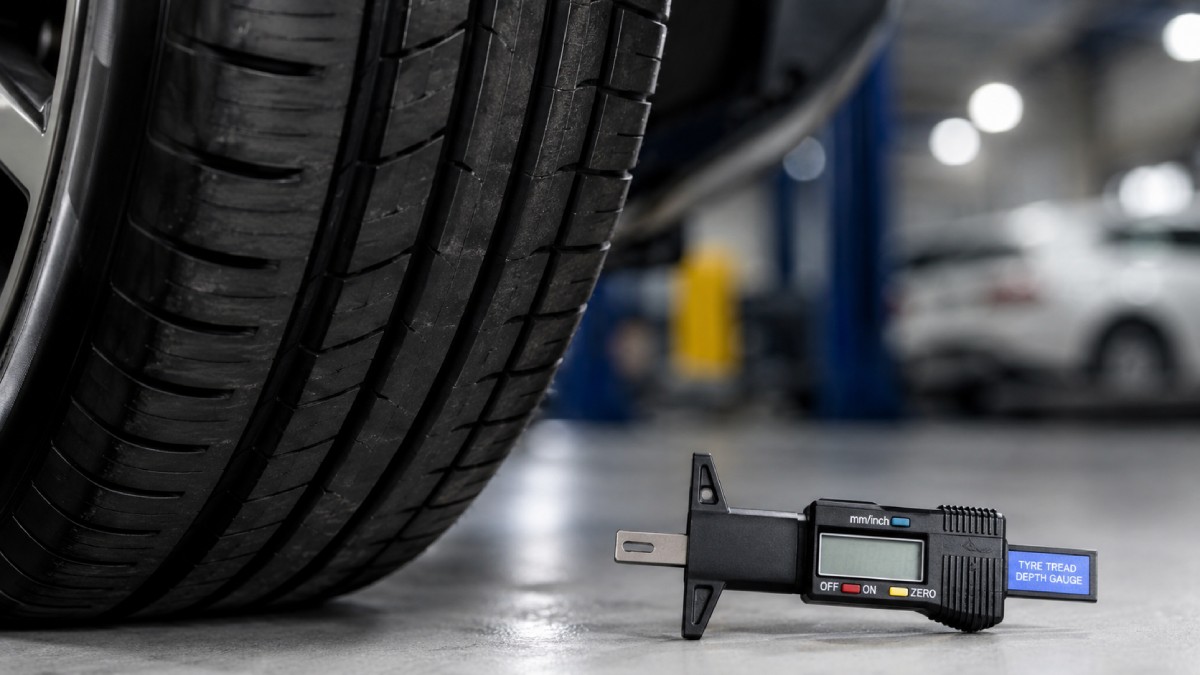
If you are asking how to check tyre tread depth for RTA passing?, the worst thing to do is judge the tyre from one clean-looking patch. A tyre can still fail because the inner edge is bald, the tread is close to the wear bar, the tyre is too old, or the sidewall has cracks, bulges, or exposed cords.
The safer approach is to measure the tread depth, check multiple grooves, read the DOT date code, and inspect all four tyres before going to the testing centre.
Quick Check: Before you go for inspection, compare wheel alignment price UAE if your tyres show inner-edge, outer-edge, or patchy tread wear.
How to Check Tyre Tread Depth for RTA Passing?

For RTA-passing preparation, use 1.6 mm as your practical tyre tread threshold. The tread should be checked across the main tread area and at different points around the tyre, not only in one visible groove. If the reading is around 1.6 mm, the tyre is already too close to the limit, so replacement before inspection is the safer choice.
Tyre tread check breakdown
|
Check point |
What to do |
Pass/fail warning |
|
Tread depth gauge |
Measure the main grooves in millimetres |
Replace if readings are around or below 1.6 mm |
|
Centre tread area |
Check across the main tread, not only one groove |
One good groove does not prove the tyre is safe |
|
Multiple positions |
Measure inner, centre, and outer grooves around the tyre |
Uneven wear can fail even when one section looks fine |
|
Tread wear indicators |
Find the raised bars inside the grooves |
If tread is level with the bar, replace the tyre |
|
DOT date code |
Read the last four digits on the sidewall |
Tyres over 5 years from manufacture are a serious RTA risk |
|
Visible damage |
Check sidewalls, shoulders, and tread blocks |
Bulges, deep cuts, cracks, or exposed cords mean replacement |
A tread depth gauge is the most reliable tool because it gives you a number instead of a guess. Press the probe into a main groove, keep the base flat on the tread surface, and read the depth in millimetres. Repeat this process on each tyre because front and rear tyres often wear at different rates.
Do not measure only the centre groove and stop. Check the inner groove, centre groove, and outer groove, then measure again at different points around the tyre. This matters because poor alignment can wear one edge faster than the rest, which is why drivers preparing for inspection often also review wheel alignment and balancing differences.
Where to measure tyre tread depth
Measure tyre tread depth in the principal grooves that run around the tyre. Do not measure on the raised tread blocks, tyre shoulder, or one random outer edge. The gauge probe should sit at the bottom of the groove while the gauge base rests flat on the tyre surface.
The key is to measure consistently. Check the same type of groove on each tyre, then compare the inner, centre, and outer readings. If the inner edge is much lower than the centre, the tread-depth issue may be linked to alignment or suspension rather than normal wear.
Uneven tyre tread often gives a warning before inspection day. Feathered edges, bald inner shoulders, or one tyre wearing faster than the others can point to steering, suspension, or wheel-angle issues. If the tread pattern looks uneven, review suspension damage signs before assuming the tyre alone is the problem.
How tread wear indicators help RTA passing

Most tyres have tread wear indicators, usually marked by small “TWI” letters, arrows, or triangles on the sidewall. Follow those marks into the groove and you will see small raised rubber bars across the tread channel. These bars show when the tyre is close to its wear limit.
If the surrounding tread is level with the wear bar, replace the tyre before the RTA inspection. Do not treat visible wear bars as a borderline case. Once the tyre surface meets the raised bar, the tread is already too worn for confident inspection preparation.
Wear bars are helpful, but they are not a complete tyre inspection. They do not tell you tyre age, sidewall condition, hidden cracks, or whether one edge has worn faster than the rest. Use them as a fast warning sign, then confirm the tread depth with a gauge.
Can you check tread without a gauge?
You can do a rough visual check without a gauge, but it should not be your final RTA-passing decision. A 1 AED coin check can give a quick idea of whether the tyre deserves closer attention, but it cannot replace a proper tread depth gauge.
A coin check does not give an exact millimetre reading. It can also miss uneven inner-edge or outer-edge wear if you only check one visible section. For inspection preparation, a gauge is better because the decision is based on measurement, not appearance.
The same rule applies to photos. A tyre photo taken from the wrong angle can hide wear bars, inner-edge wear, sidewall cracks, or bulges. If your goal is RTA passing, measure the tyre directly and check every tyre on the vehicle.
Tyre age matters for RTA passing
Tread depth is only one part of the tyre check. RTA renewal guidance treats tyre age as a key inspection issue, and tyres are generally considered valid for a maximum of 5 years from the date of manufacture. Damaged tyres must also be replaced before a vehicle can pass technical inspection.
To check tyre age, look for the DOT date code on the tyre sidewall. The last four digits show the manufacturing week and year. For example, 2423 means the tyre was manufactured in the 24th week of 2023.
Do not count tyre age from the date you bought or fitted the tyre. The important date is the manufacturing date because rubber ages even when the tyre has low mileage. A tyre can have visible tread and still be too old for inspection confidence.
Tyre damage that can fail inspection
A tyre can have enough tread depth and still be unsafe. Check the sidewalls, tread shoulders, and the area near the rim for cuts, cracks, bubbles, blisters, bulges, exposed cords, or visible fabric. These are not cosmetic issues when preparing for RTA passing.
Damage signs before inspection
|
Tyre condition |
What it may mean |
What to do before RTA |
|
Bulge or bubble |
Internal tyre structure may be damaged |
Replace the tyre before testing |
|
Deep sidewall cut |
Sidewall strength may be compromised |
Replace; do not rely on a repair |
|
Exposed cord or fabric |
Tyre is no longer roadworthy |
Replace immediately |
|
Severe cracking |
Rubber may be aged or weakened |
Check age and replace if needed |
|
One-edge bald wear |
Alignment or suspension may be causing uneven contact |
Inspect alignment and suspension |
|
Patchy tread wear |
Wheel balance, shocks, or tyre condition may be involved |
Diagnose before the inspection |
UAE heat makes tyre condition especially important, but the inspection point is still practical: visible damage matters. Cracks, bulges, and exposed cords should be treated as replacement signs, not issues to postpone until after renewal.
If you are preparing a used vehicle for transfer or renewal, do not stop at the tyres. RTA testing may identify issues another inspection missed, especially when tyre wear points toward alignment, suspension, or braking concerns. This is where a broader RTA vehicle inspection checklist can help you avoid a failed visit.
Uneven tread wear and wheel alignment
Uneven tread wear is one of the most useful clues before inspection. If the inside edge is bald while the centre still has depth, the tyre may be leaning incorrectly on the road. If both outer edges are worn, tyre pressure may have been too low. If the centre is worn faster, overinflation may be involved.
Alignment-related tyre wear matters because it can damage new tyres if the underlying issue is not corrected. Drivers in Dubai can check car service in dubai when tyre wear suggests the vehicle needs more than a simple tyre replacement.
In Abu Dhabi, uneven tread wear should be checked before inspection rather than after a failed result. If the steering pulls, the tyre shoulders are wearing fast, or the steering wheel sits off-centre, compare wheel alignment cost in abu dhabi before replacing tyres without fixing the cause.
Sharjah drivers should also treat tread wear as a diagnostic clue. If the tyre looks low on one edge, a workshop check for wheel alignment in sharjah can help confirm whether the tread problem is linked to wheel angle, suspension, or tyre pressure.
For Ajman vehicles, do not assume a new tyre will solve the issue if the same corner keeps wearing quickly. A check for wheel alignment ajman is useful when the tread pattern shows repeated edge wear or steering pull.
Used-car tyre checks before RTA transfer

Used-car buyers should check tyre tread before relying on a transfer inspection. Real driver discussions around failed RTA tests show that tyre, alignment, and suspension issues can appear during inspection even when another check did not clearly flag the same problems.
Before buying, measure all four tyres, check the DOT date code, inspect the sidewalls, and look for uneven tread. A used vehicle can look clean but still have old tyres, poor alignment, or suspension wear. A practical used-car pre-purchase checklist should include tread depth, tyre age, wheel condition, and steering feel.
If the tyre wear is uneven, ask why. Uneven tread can come from old alignment issues, worn suspension parts, poor tyre pressure habits, or accident-related geometry problems. The tyre tells part of the story, but the rest of the vehicle should confirm it.
Pre-test tyre checklist for vehicle renewal
Use this tyre checklist before going to the testing centre:
- Measure tread depth with a gauge.
- Check inner, centre, and outer grooves.
- Repeat the measurement around each tyre.
- Find the tread wear indicators.
- Read the DOT date code.
- Confirm tyres are not over 5 years from manufacture.
- Check for cracks, cuts, bulges, bubbles, and exposed cords.
- Check tyre pressure before driving to the test.
- Look for steering pull or vibration.
- Fix obvious alignment, suspension, or brake issues before inspection.
Tyres are the focus here, but vehicle inspection is not limited to rubber. If your tyres show heat-related wear or the car is due for summer maintenance, review UAE summer car part failures so you do not miss cooling, battery, or rubber-component issues before renewal.
Brakes are another practical pre-test area because tyre grip and braking performance work together. If you hear grinding, feel vibration under braking, or see uneven stopping behaviour, check UAE brake problem signs before assuming the tyres are the only issue. If the tyres are due and the brakes feel weak, brake pad and disc replacement timing can help you decide what to inspect next.
When a vehicle needs more than tyres, it helps to understand what a workshop visit may include. A complete car repair workflow can include inspection, diagnosis, replacement parts, alignment checks, road testing, and safety checks. If tyre damage reveals wider repair needs, review parts and labour factors before approving work.
How to check tyre tread depth for RTA passing? Area Coverage
Local driving conditions, inspection habits, and service access can affect how early you should check tyre tread before renewal or transfer. The same tread, age, and damage checks apply across the UAE, but local service availability matters when you need tyres, alignment, or suspension checks before inspection.
UAE Car Repair Services
Across the UAE, tyre tread checks should include depth, DOT age, sidewall condition, pressure, and uneven wear. This is especially important before renewal because tyre validity is based on manufacture date, not purchase date. A UAE-wide service check is useful when tread wear suggests alignment, balancing, suspension, or brake issues alongside tyre replacement.
Abu Dhabi Car Repair Services
In Abu Dhabi, drivers preparing for vehicle inspection should check tyre tread before the appointment instead of discovering the issue during testing. A practical tyre check should cover all four tyres, tread wear indicators, and age codes. If one shoulder is wearing faster, an Abu Dhabi car repair visit can help confirm whether alignment or suspension is creating the tread problem.
Dubai Car Repair Services
Dubai drivers often focus on RTA passing because renewal and transfer testing are common reasons for inspection. Before visiting a testing centre, check the tyre tread with a gauge, confirm the DOT date, and inspect sidewalls for cuts or bulges. If the tyre is old, damaged, or unevenly worn, fix it before the inspection instead of risking a failed result.
Sharjah Car Repair Services
For Sharjah vehicles, tyre tread depth should be checked early enough to repair related causes before inspection. If the tyre shows uneven wear, replacing the tyre without checking wheel alignment may only hide the symptom for a short time. A Sharjah car repair check can help identify whether steering pull, suspension wear, or tyre pressure habits are affecting tread life.
Ajman Car Repair Services
Ajman drivers preparing for renewal should inspect tyres in daylight and measure more than one groove on each tyre. If tread readings vary sharply from inner to outer grooves, the car may need alignment or suspension attention before testing. A local Ajman car repair check is most useful when tyre wear appears uneven or the steering wheel does not sit straight.
Final check before RTA tyre inspection
The safest answer to how to check tyre tread depth for RTA passing? is to measure first, then inspect everything else. Use a tread depth gauge, check the wear bars, read the DOT date, and look for damage on the sidewall and tread shoulder. If the tread is close to the limit, the tyre is over 5 years from manufacture, or the tyre has bulges, cracks, deep cuts, or exposed cords, replace it before the test.
If your tyre wear is uneven, the real issue may be alignment or suspension. Before renewal or transfer, use TelusCare’s wheel alignment price UAE page to compare service options and avoid replacing tyres without correcting the cause. A small pre-test check is usually easier than dealing with a failed inspection and a re-test.
FAQs
How do I check tyre tread depth for RTA passing?
To check tyre tread depth for RTA passing, use a tread depth gauge in the main grooves of each tyre. Measure the inner, centre, and outer groove areas, then repeat around the tyre circumference. Do not rely on a photo or one visible section because uneven wear can hide on the inner shoulder. Also check tread wear indicators, tyre age, sidewall cracks, bulges, and exposed cords before the inspection.
What is the minimum tyre tread depth for RTA inspection?
For practical RTA inspection preparation, use 1.6 mm as the safer replacement threshold. If the tyre is already around this level, it is too close for comfort before inspection. Measure the tread with a gauge rather than guessing from the tyre’s appearance. Replace tyres before the test if the tread is near the wear indicators or if readings vary badly across the tyre.
Where exactly should I measure tyre tread depth?
Measure tyre tread depth in the main grooves, not on the raised tread blocks. Check the inner, middle, and outer main grooves on each tyre, then measure at different points around the circumference. This is important because a tyre can have acceptable tread in the centre but severe wear on the inner or outer edge. That uneven wear can point to alignment, balancing, pressure, or suspension issues.
Can I check tyre tread depth without a gauge?
You can do a rough tyre tread check without a gauge by looking at tread wear indicators or using a coin method as a quick warning sign. However, this should not replace a tread depth gauge when preparing for RTA passing. A gauge gives a millimetre reading, while visual checks only show whether the tyre looks close to worn. For inspection preparation, measuring is safer than guessing.
How do tread wear indicators show tyre failure?
Tread wear indicators are small raised rubber bars inside the tyre grooves. Look for TWI marks, arrows, or small triangles on the sidewall, then follow them into the groove. If the tread surface is level with the wear bar, the tyre is at or near its wear limit and should be replaced before RTA testing. The wear bar is a warning, not a target to drive on.
Is the 1 AED coin test enough for checking tyre tread?
The 1 AED coin test can be a quick visual guide, but it is not enough when you want confidence before RTA passing. It does not give an exact millimetre reading and may not reveal uneven inner-edge or outer-edge wear. Use it only as a rough first check. If the tyre looks close to worn, confirm with a tread depth gauge and inspect the tyre’s age and condition.
Can my car fail RTA even if the tyres still have tread?
Yes. A tyre can have visible tread and still fail because of age, cracks, bulges, deep cuts, exposed cords, or severe uneven wear. Tyre age is based on the manufacturing date, not the purchase date. That means tread depth is important, but it is not the only tyre condition that matters before RTA inspection.
How old can tyres be for RTA passing in Dubai?
For RTA passing preparation, treat 5 years from the manufacturing date as the maximum safe tyre-age threshold. Check the DOT date code on the tyre sidewall, not the purchase invoice. The last four digits show the week and year of manufacture, such as 2423 for the 24th week of 2023. If the tyre is over 5 years old, replace it before inspection.
Can uneven tyre wear cause RTA failure?
Uneven tyre wear can create an RTA-passing problem when one area of the tyre is below the acceptable tread depth or when the tyre shows severe bald patches. It can also point to alignment, suspension, or pressure problems that affect safety. Measure more than one groove and inspect both shoulders. If one edge is much lower than the centre, fix the cause before fitting new tyres.

