


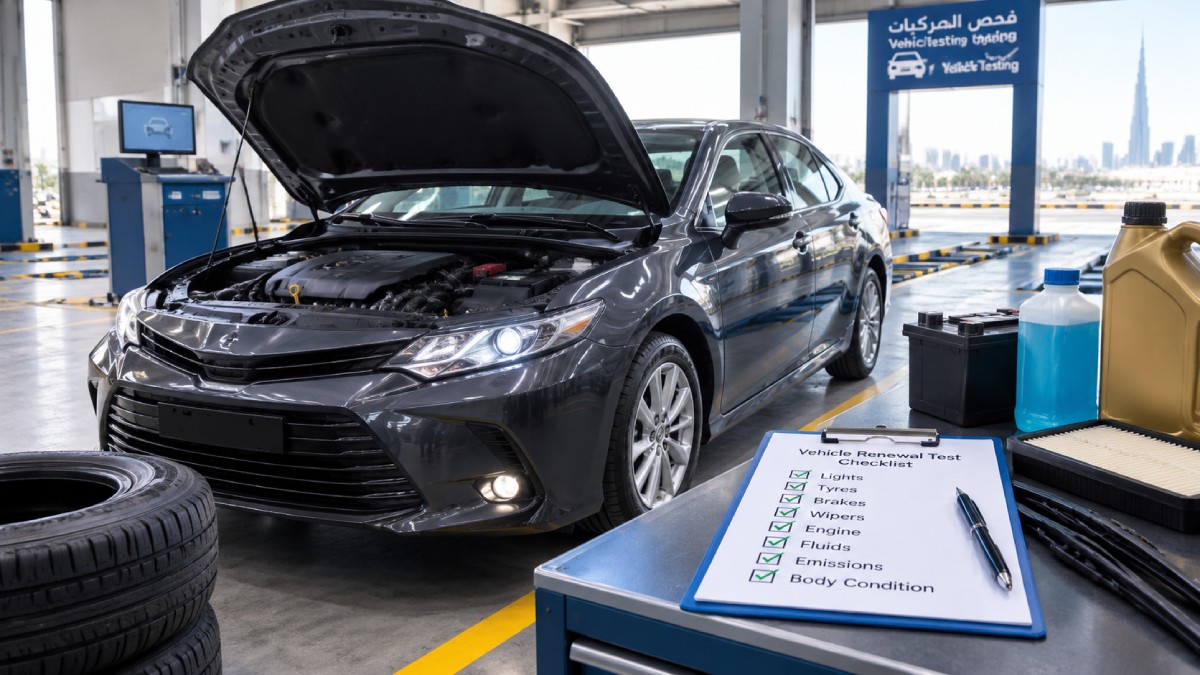
If your registration renewal is coming up, the main question is simple: How Do I Prepare My Car for a Renewal Test in the UAE? Many drivers only think about insurance or fines, then reach the inspection centre with worn tyres, a faulty plate light, weak brakes, or a visible leak. That can turn a routine renewal into a failed test, repair delay, and re-inspection. The safest approach is to prepare the car first, book the inspection where required, pass the technical test, confirm insurance and fines, then complete the registration renewal.
Quick Check: Before you book the inspection, use car repair in UAE support to check tyres, brakes, lights, leaks, seatbelts, and safety equipment properly.
How Do I Prepare My Car for a Renewal Test in the UAE?

Preparing for a renewal test in the UAE is mostly about checking the items that inspectors are likely to flag: tyres, lights, brakes, leaks, visibility, body condition, and required safety equipment. The renewal process also includes paperwork steps, but a clean document file will not help if the car has an obvious mechanical or safety defect.
A practical sequence is: prepare the car, book the inspection, pass the test, confirm valid insurance, clear applicable fines, then finish registration renewal. In Dubai, advance booking for vehicle inspection has become especially important, so do not assume you can simply arrive and join a normal queue.
Renewal Test Preparation Checklist
|
Renewal test area |
What to check before inspection |
Why it matters |
|
Tyres |
Age, tread, sidewall cracks, cuts, uneven wear |
Old or damaged tyres are a common failure risk |
|
Lights |
Headlights, brake lights, indicators, hazards, reverse lights, number-plate light |
Small bulb faults are easy to miss |
|
Brakes |
Brake noise, pulling, vibration, soft pedal, handbrake holding |
Brake imbalance and parking-brake issues can fail inspection |
|
Leaks |
Oil, coolant, water stains under the car |
Active leaks are often flagged |
|
Visibility |
Windscreen, wipers, washers, mirrors |
The driver’s field of vision must be safe |
|
Safety equipment |
Warning triangle, spare wheel, fire extinguisher where applicable |
Required equipment should be visible and accessible |
|
Body condition |
Serious dents, peeling, structural damage, unapproved stickers |
Bodywork and chassis condition are part of inspection |
|
Renewal process |
Inspection booking, fines, insurance, test certificate validity |
Passing inspection and renewing registration are separate steps |
Book the Renewal Test Before You Arrive
A major part of preparing for a renewal test in the UAE is understanding the correct order. Drivers often ask whether they should renew insurance first, inspect the car first, or wait until the registration is close to expiry. The practical answer is to prepare the vehicle first, then arrange the inspection and renewal requirements in the correct order.
For Dubai, the supplied research notes that advance booking is mandatory for vehicle inspections, with walk-in options at some participating centres for an additional fee. That means turning up without an appointment can create unnecessary cost or delay. If your car is in Dubai and you are unsure about warning lights, brake behaviour, or engine faults before the test, a pre-check for car diagnostic in Dubai can help identify obvious problems before inspection day.
Insurance and technical inspection both need to be valid when the renewal transaction is completed. Do not overcomplicate the sequence: prepare the car, complete the test, make sure insurance is valid, clear fines, and then finish the registration renewal before the inspection certificate window runs out.
Check Tyres Before the Renewal Test
Tyres deserve careful attention before a renewal test in the UAE because they can look usable and still create a failure risk. Drivers often judge tyres by tread alone, but the research highlights two separate issues: tyre age and tyre condition. A tyre with visible tread can still be too old, cracked, damaged, or unevenly worn.
Check the manufacturing date on each tyre, including the spare if it is required for your vehicle. The supplied research states that Dubai RTA guidance treats tyres as having a maximum validity of five years from manufacture, while damaged tyres must be changed earlier. UAE heat also makes tyre condition more important, so the guide on UAE summer car parts failure patterns is a useful next step for understanding heat-related wear.
Look for sidewall cracks, bulges, cuts, flat spots, and uneven tread. Uneven tyre wear can also point to steering, suspension, or alignment problems, which may matter during inspection. If the car pulls to one side or the steering wheel sits off-centre, review wheel alignment and balancing checks before the test.
Test Every Light, Including the Plate Light
Small lighting faults are one of the easiest renewal test problems to prevent. A car can drive normally every day while still having a failed brake light, weak indicator, broken reverse light, or non-working number-plate bulb. These issues are simple to check but easy to forget.
Before the renewal test, switch on the headlights, high beams, indicators, hazard lights, reverse lights, brake lights, and number-plate light. Ask someone to stand outside the car while you test each function. Also check that lenses are not badly cracked, heavily clouded, tinted in a questionable way, or physically damaged.
Do not assume that only major lights matter. The supplied research includes a real driver report of failing previously because of a number-plate light. If headlights are cloudy, dim, tinted, or physically damaged, repair them before the inspection rather than hoping the fault is ignored.
Inspect Brakes and the Handbrake Early
Brakes are a high-priority renewal test item because a car can feel acceptable in normal driving but still show imbalance or weakness during inspection. Pay attention to grinding, squealing, vibration, pulling, soft pedal response, or a burning smell after braking. These are warning signs that the braking system needs attention before the test.
The handbrake matters too. A parking brake that feels weak, rises too high, or does not hold the car securely can create an inspection issue. If you already notice poor holding on a ramp or driveway, do not wait until the renewal test to investigate it.
For UAE drivers, common brake problem patterns in UAE cars can help connect symptoms to likely causes. If the issue involves worn pads, discs, vibration, or braking distance, brake pad and disc lifespan checks is a relevant follow-up before booking inspection.
Look for Oil, Coolant, and Water Leaks

A renewal test in the UAE can become difficult if there is an active leak under the car. Some drivers try to clean the underside and hope the problem disappears, but that is not proper preparation. If oil or coolant is leaking, the source should be found and repaired.
Check the ground where the car is usually parked. Dark brown or black stains may point to engine oil. Green, pink, orange, or watery stains may suggest coolant or other fluid leaks. Also inspect the engine bay for wet areas, residue, low coolant, or low oil levels.
Leaks often connect with wider engine or cooling-system issues. If your temperature gauge rises, coolant level drops, or the engine bay smells hot, read about engine overheating causes in UAE driving and radiator failure warning signs. If the engine shakes, hesitates, or idles roughly, engine misfire and rough-idle causes can help you understand what may need diagnosis.
Check Seatbelts, Horn, Mirrors, and Wipers
Seatbelts can look fine while still failing a functional check. Before the renewal test, pull each seatbelt sharply to confirm it locks, retracts smoothly, latches securely, and is not torn or badly worn. Do this for all seating positions, not only the driver’s seat.
Also test the horn, mirrors, windscreen wipers, and washers. Wipers should clear the windscreen properly without smearing, skipping, or leaving large untouched areas. Washer fluid should spray correctly, and mirrors should be secure enough to give a clear rear view.
Visibility items matter because they affect safe driving, not just inspection paperwork. If the windscreen has a meaningful crack in the driver’s view, or mirrors are broken or loose, repair them before the test.
Do Not Ignore Engine and Gearbox Warnings
A renewal test is not only about the visible exterior. If the engine warning light is on, the car misfires, the idle is rough, or the gearbox shifts harshly, the car may need attention before inspection. These symptoms can point to faults that affect emissions, drivability, or safety.
Serious engine symptoms should be handled before the test, especially if they come with smoke, overheating, knocking, oil loss, or repeated stalling. The guide on serious engine damage warning signs is relevant if the car feels unsafe or abnormal before inspection.
Gearbox symptoms also deserve attention. Delayed shifting, jerking, slipping, unusual noises, or warning messages may not be cosmetic problems; they can affect how safely the vehicle operates. For those symptoms, review gearbox problem warning signs before you book the renewal test.
Review Suspension, Steering, and Alignment
Suspension and steering faults can affect tyre wear, braking stability, and overall inspection readiness. If the car bounces excessively, makes knocking noises over bumps, leans to one side, or feels unstable at speed, check the suspension before the renewal test.
Steering problems also need attention. A loose steering feel, vibration through the wheel, uneven tyre wear, or the car pulling to one side can point to alignment, suspension, or steering faults. These issues may also cause tyres to wear unevenly, creating another inspection risk.
For a focused check, use suspension damage warning signs to compare symptoms before visiting a workshop. Drivers in the northern emirates who already feel vibration or pulling can also arrange wheel alignment in Ajman before the test.
Clean the Car Without Hiding Defects
Washing the car before a renewal test in the UAE is sensible because the vehicle and registration plates should be clean and readable. Clean plates help inspectors identify the vehicle properly, and a clean exterior makes body condition easier to assess.
That does not mean every car automatically needs a special underbody wash. The supplied research specifically highlights this as a common first-time renewal question. The better rule is simple: wash the vehicle, clean the number plates, and investigate real leaks instead of trying to wash them away.
If there is an underside cover that must be removed for inspection, handle that before the test. Also remove or resolve unapproved stickers, advertisements, or questionable modifications where applicable.
Prepare Safety Equipment Before Inspection
The warning triangle should be visible and accessible before the renewal test. Do not leave it buried under luggage, tools, or loose items in the boot. If your vehicle category requires a spare wheel or fire extinguisher, those items should also be accessible and in acceptable condition.
This is a quick check that can prevent an avoidable issue. Before leaving home, open the boot and confirm that emergency equipment is present, reachable, and not damaged. Also remove unnecessary clutter that blocks access to required items.
If you recently bought the car secondhand, do a wider condition review before relying on the previous owner’s setup. A used-car inspection checklist can help identify missing equipment, hidden wear, or maintenance gaps that affect renewal readiness.
Know What Happens if the Car Fails
If the car fails the renewal test, do not guess what the inspector wants. Use the defect report as the repair list. It should guide what needs to be fixed before re-inspection, whether the issue is tyres, brakes, lights, leaks, bodywork, parking brake, or another safety item.
For Dubai light vehicles, the supplied research lists the technical inspection fee as AED 170 total and light-vehicle re-inspection as AED 50. Fees and rules can change, so confirm the amount in the official booking or payment screen before completing the transaction.
A passed technical inspection is not the same as completed registration renewal. The supplied research notes that the Dubai technical inspection certificate is valid for 30 days, so finish the renewal process within the valid period instead of leaving it until the certificate expires.
How Do I Prepare My Car for a Renewal Test in the UAE? Area Coverage

Local inspection preparation matters because driving conditions, workshop access, traffic rules, and vehicle use can vary across the UAE. The core checklist stays the same: tyres, brakes, lights, leaks, visibility, body condition, and safety equipment should be checked before the renewal test.
UAE Car Repair Service Page
Across the UAE, renewal test preparation should focus on the defects most likely to create inspection delays: tyre age and condition, lighting faults, brake response, leaks, windshield visibility, and accessible emergency equipment. UAE summer heat can be hard on tyres, cooling systems, batteries, rubber parts, and fluids, so drivers should not wait until the inspection lane to discover a worn or damaged component.
Abu Dhabi Car Repair Service Page
For Abu Dhabi drivers, the renewal test checklist should start with the same practical safety items: tyres, brakes, lights, wipers, mirrors, leaks, seatbelts, and the warning triangle. If a vehicle is used for longer commutes or frequent city driving, checking brake wear, tyre condition, coolant level, and visible leaks before inspection can reduce the chance of a failed test and repeat visit.
Dubai Car Repair Service Page
Dubai drivers should pay special attention to booking the inspection appointment before visiting a centre. The supplied research notes that advance booking is mandatory in Dubai, with limited walk-in options at some centres for an extra fee. Before that appointment, check small items such as the number-plate light, brake lights, seatbelt locking action, tyre age, and any visible oil or coolant leak.
Sharjah Car Repair Service Page
Sharjah drivers preparing for a renewal test should give brakes and tyres enough attention before the inspection date. Stop-start driving, heat, and daily use can expose weak brake pads, worn discs, pulling, vibration, or handbrake weakness. If any of those symptoms appear, arranging brake repair in Sharjah before inspection can help address safety issues instead of waiting for a failed report.
Ajman Car Repair Service Page
Ajman drivers should check tyre wear patterns, steering feel, and wheel alignment before the renewal test. If the steering wheel is off-centre, the car pulls to one side, or the tyres show uneven wear, the inspection risk is not only the alignment itself but also the tyre condition it creates. A pre-test check can help correct visible issues before the vehicle reaches the inspection lane.
Final Renewal Test Preparation Advice
A renewal test in the UAE is easier when you treat it as a safety check, not only a paperwork task. Start with tyres, lights, brakes, leaks, visibility, seatbelts, and emergency equipment, then handle booking, insurance, fines, and final registration renewal. If the car already shows warning signs, arrange car repair in UAE before the inspection so the defect report does not become your first diagnosis. Fix real problems rather than hiding them, and complete the renewal while the inspection certificate is still valid.
FAQs About Preparing for a Renewal Test in the UAE
Do I need to book an appointment before a UAE renewal test?
For a renewal test in the UAE, booking requirements depend on the emirate and inspection provider, but Dubai drivers should be especially careful. The supplied research states that Dubai vehicle inspections require advance booking, with walk-in options only at some participating centres for an additional fee. That means booking before you visit can prevent unnecessary waiting, extra cost, or a wasted trip.
Should I renew car insurance before or after the renewal test?
For a renewal test in the UAE, the important point is that valid insurance and a valid technical inspection must both be available when the registration renewal transaction is completed. The supplied research advises not to overstate that insurance must always be purchased before the inspection itself. A practical sequence is to prepare the car, pass inspection, confirm insurance, clear fines, and then complete renewal.
Can old tyres fail the renewal test even with tread left?
Yes, old tyres can affect a renewal test even if the tread still looks acceptable. The supplied research states that Dubai guidance treats tyres as having a maximum validity of five years from manufacture, while damaged tyres must be replaced sooner. Check the tyre date code, sidewall cracks, cuts, bulges, uneven wear, and tread condition before inspection day.
Can a broken number-plate light fail the renewal test?
A broken number-plate light can create a renewal test problem because lighting equipment is part of the vehicle safety check. The supplied research includes a real driver report of previously failing because of this small bulb. Before leaving home, test headlights, high beams, brake lights, indicators, hazards, reverse lights, and the number-plate light with someone standing outside the car.
Will an oil leak cause problems during the renewal test?
An active oil leak can cause problems during a renewal test because leaks are a visible sign that the vehicle needs repair. The right preparation is not to wash away the evidence and hope for the best. Check the ground where the car is parked, inspect the engine bay, monitor oil level, and repair the source of the leak before inspection.
Do I need an underbody wash before the renewal test?
A special underbody wash is not automatically required for every renewal test. The supplied research says the vehicle and plate should be clean, and underside covers should be removed where applicable, but it does not support the idea that every car needs paid underbody cleaning. Wash the exterior, clean the registration plates, and investigate leaks rather than trying to hide them.
Can minor scratches or dents fail a UAE renewal test?
Minor cosmetic scratches are not the same as serious body damage during a renewal test. The supplied research notes mixed driver experiences around peeling paint, scratches, and dents, so it is better not to claim that every cosmetic mark causes failure. Serious body deterioration, damaged panels, structural concerns, or unsafe modifications should be addressed before inspection.
What happens if my car fails the first renewal test?
If your car fails the renewal test, use the defect report as the repair list. Do not guess or rely on general advice when the inspection report identifies the actual issue. Fix the listed defects, whether they involve tyres, brakes, lights, leaks, parking brake, suspension, or visibility, then complete the re-inspection and finish registration renewal within the valid inspection period.
Source basis: supplied topic brief, URL inventory, and research dump.

